EICR, testing & fuse boards
Landlord and homeowner EICRs, consumer unit upgrades and full testing — carried out and certified in-house to BS 7671 18th Edition.



 Part P
 BS 7671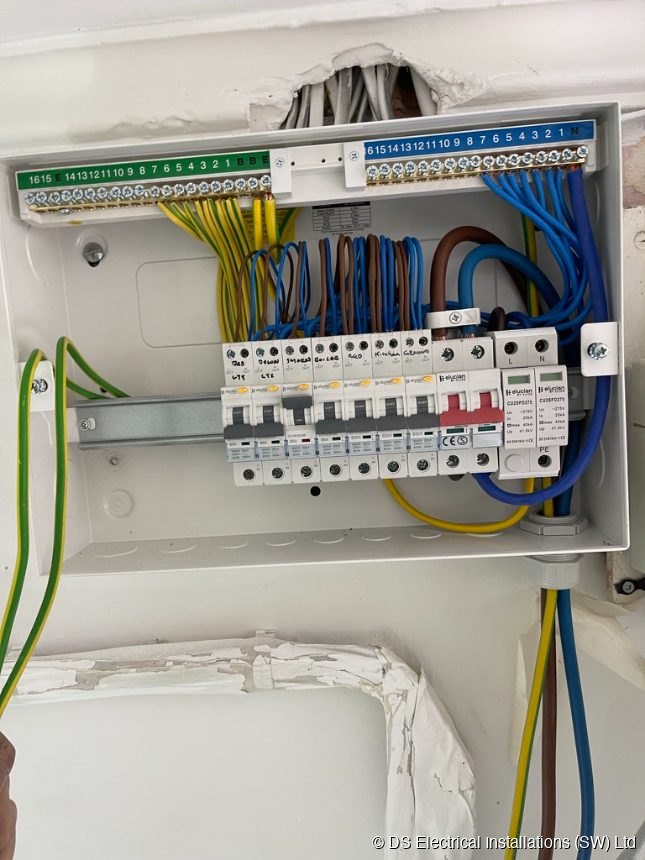
Inspection & testing
An EICR checks the condition of your installation and flags anything unsafe. We test, report clearly, and can carry out any remedial work needed.
What we test & fit
Full inspection with a clear coded report you can act on.
Tired or unsafe boards swapped for modern protection.
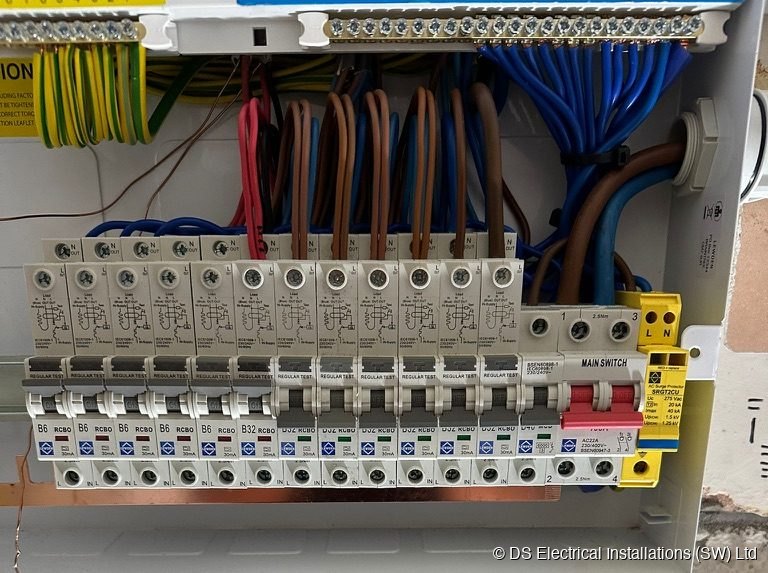
Per-circuit protection, arc-fault and surge devices.
Every circuit labelled and handed over with paperwork.
Pricing
The price depends on the size of the installation, the number of circuits and whether the supply is single-phase or three-phase. Send your address and we will count the circuits, then confirm a fixed price in writing before we start.
FAQ
Yes. Since April 2021 all landlords in England must have a valid EICR before new tenancies and at least every 5 years. We can usually test and certify within 24 hours of booking.
Up to 5 years for rentals — sooner if the report recommends it. A new tenancy does not need a new EICR if the current report is under 5 years old and needs no further work.
We explain any coded issues in plain English and give you a separate fixed quote for the remedial work. No pressure.
An Electrical Installation Condition Report (EICR) is a formal inspection of the fixed electrical wiring in a property. It identifies any defects, deterioration, or non-compliance with current safety standards (BS 7671 18th Edition Amendment 4). The report classifies issues by severity and confirms whether the installation is satisfactory for continued use.
Landlords must have the installation inspected and tested before a tenancy starts and at intervals of no more than 5 years (or sooner if the last report says so). Homeowners should have one every 10 years or when buying or selling a property. For businesses, no law sets a fixed interval; NICEIC recommends at least every 5 years, and your insurer may ask for more often. You should also get one if you notice any electrical faults or have not had one before.
Yes. The Regulations applied to new tenancies from 1 July 2020 and to all existing tenancies from 1 April 2021, so every rental property in England must now have a valid EICR under the Electrical Safety Standards in the Private Rented Sector and Social Rented Sector (England) Regulations 2020. It must be renewed at least every 5 years (sooner if the report says so). A new tenancy does not need a new EICR if the current report is under 5 years old and needs no further work. A copy must be supplied to tenants within 28 days and to the local authority on request. Fines of up to £40,000 per breach.
There is no flat fee: the price depends on the size of the installation, the number of circuits and whether the supply is single-phase or three-phase. A typical 3-bed house has 6-10 circuits. Send your address and we will count the circuits and come back with a fixed quote the same day. Portfolio discounts for multi-property landlords.
An EICR covers the fixed electrical installation — the wiring, consumer unit, sockets, lights, and protective devices. PAT (Portable Appliance Testing) covers plug-in appliances: kettles, extension leads, computers, tools. Most commercial premises need both. DS Electrical Installations (SW) Ltd carries out EICRs in-house and offers PAT testing as an add-on.
C1 means danger present, immediate risk — we make safe before leaving site. C2 means potentially dangerous and must be remedied for the report to be classed Satisfactory. We give you a written remedial quote alongside the report, you accept what you want done, and we re-test affected circuits free of charge once the work is complete.
Most domestic 1-bed flats: 1.5-2 hours. 3-bed semi: 2.5-3 hours. 5-bed period property: half a day or more. Commercial three-phase installations vary with circuit count and access. Every circuit is dead-tested for continuity, insulation resistance, polarity, earth fault loop impedance, and RCD timing — readings are recorded against the schedule, never ticked off without measurement.
What a proper EICR actually involves
An EICR is a statutory-quality inspection of the fixed electrical installation. It sits behind landlord compliance, insurance claims and house-sale surveys. When done properly, this is what a single visit actually contains — and it’s why we price per circuit, not by the hour.
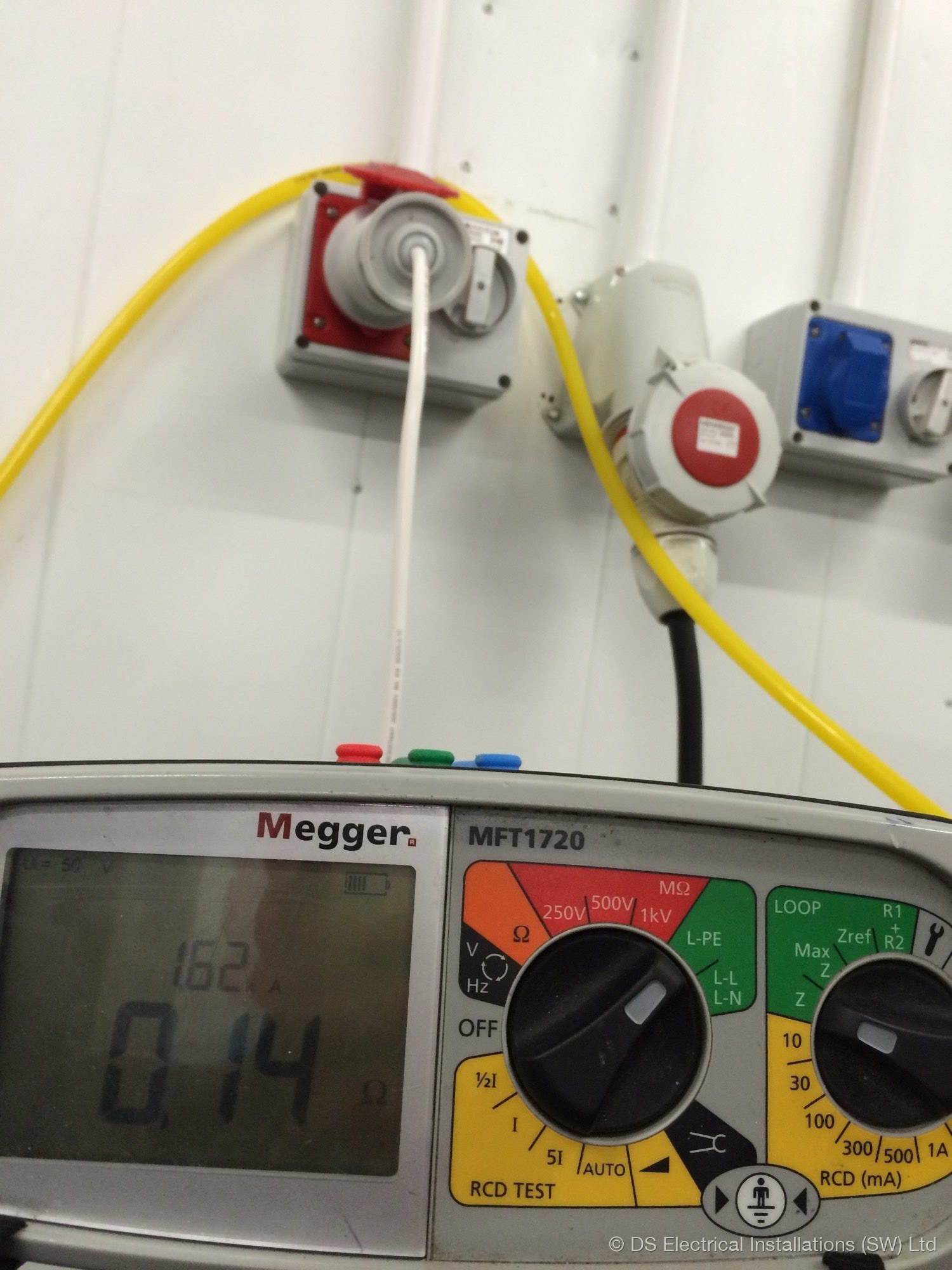
Megger MFT1741 multifunction tester, UKAS-traceable annual calibration, low-resistance ohmmeter, insulation tester, RCD tester, loop impedance tester, approved voltage indicator, proving unit. Not a socket-tester from Screwfix. Calibration re-certification every 12 months, without exception — an out-of-cal tester invalidates every result on the report.
Level 3 Award in Inspection, Testing & Certification (C&G 2391/2394/2395). BS 7671:2018+A4:2026 18th Edition current. NAPIT Approved Contractor (66245, annual subscription), so landlords, lenders and insurers can check our competence independently. £2 M public liability cover. All of that sits behind every test reading on your report.
Every observation coded to BS 7671 (C1 / C2 / C3 / FI). Schedule of circuits with every reading recorded. Schedule of test results. Schedule of inspections. Dated, signed, NAPIT-issued. Valid for landlord registration under the Electrical Safety Standards Regulations 2020, for a lender survey, for an insurance claim, for commercial compliance. Not a tick-box.
Landlords in England must hold a valid EICR under the Electrical Safety Standards in the Private Rented Sector and Social Rented Sector (England) Regulations 2020. Non-compliance can attract civil penalties up to £40,000 per breach. The Regulations require a qualified, competent person, working to current regulations, with dated test results. We are NAPIT-registered (66245), so you can check our competence independently.
Annual NAPIT registration. Annual calibration. 18th Edition re-certification. 2391 CPD. Public liability. Vehicle, tools, software, filed certificates. A proper EICR is two to four hours on site plus an hour of paperwork and lodging. Pricing per circuit is the fairest way to reflect the work the installation actually needs — not a flat fee that over-charges small flats and under-charges large houses.
EICR & rewires in detail
Whether you need a landlord certificate, a full rewire, or a consumer unit upgrade — we handle it all to current regulations with zero fuss.
An Electrical Installation Condition Report (EICR) is a formal, detailed inspection of the fixed electrical wiring in a property — everything from the incoming supply and main earthing arrangement through to final circuits, sockets, light fittings, and protective devices. Carried out in accordance with BS 7671:2018+A4:2026 (the 18th Edition of the IET Wiring Regulations), the report identifies any defects, deterioration, damage, or non-compliance with current safety standards. Every issue found is classified by severity using a standardised coding system, giving you a clear picture of what needs urgent attention and what can be scheduled for improvement.
Our inspections follow the methodology set out in BS 7671 and the IET Guidance Note 3 (Inspection & Testing). Here is what happens during a typical EICR:
Every defect or observation found during an EICR is assigned a classification code. These codes determine the overall outcome of the report:
An installation is rated Satisfactory only when there are no C1 or C2 codes. If any C1 or C2 is present, it is Unsatisfactory and remedial work is required.
The Electrical Safety Standards in the Private Rented Sector and Social Rented Sector (England) Regulations 2020 impose strict legal duties on landlords:
We issue the EICR, carry out any required remedial works, and provide the updated certification — all in one service. No chasing separate contractors.
If your EICR comes back Unsatisfactory, it is not the end of the world — but it does need to be dealt with promptly:
We handle the full cycle from inspection through remedial works to final certification, so you have one point of contact throughout.
A valid EICR is increasingly important for insurance purposes and legal compliance:
We use professional-grade, calibrated instruments for every inspection. Our test kit includes:
All instruments are calibrated annually and carry valid calibration certificates. Test results you can trust.
Older properties — particularly those with original rubber or lead-sheathed cabling, imperial-sized conductors, or installations predating the 16th Edition — often need a full or partial rewire to meet current standards. We strip back outdated wiring, install modern twin-and-earth or LSOH (Low Smoke Zero Halogen) cable, fit a new consumer unit with RCBO protection on every circuit, and certify the entire installation. Minimal disruption, clean finish, fully compliant with BS 7671:2018+A4:2026. All work is notified to Building Control via our NAPIT registration. See our rewires service →
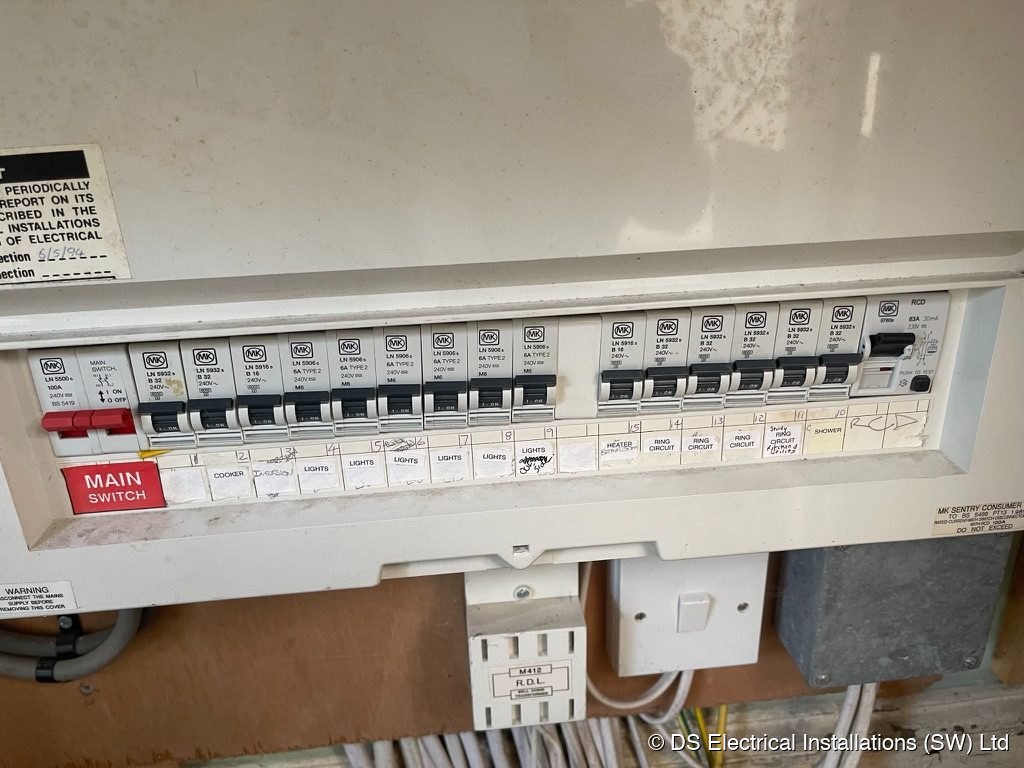
If your fuse box still has rewirable fuses, an old MCB board without RCD protection, or a consumer unit that does not comply with the current non-combustible enclosure requirements of Amendment 3 to the 17th Edition (BS 7671:2008), it needs upgrading. We fit modern, metal-clad consumer units with RCBOs for individual circuit protection — meaning a fault on one circuit does not take out the rest of the property. We also label every circuit clearly and provide a full Electrical Installation Certificate (EIC) for the work. All notifiable under Part P of the Building Regulations and lodged with your local authority automatically through NAPIT.
Commercial & industrial
Commercial EICRs are more involved than domestic inspections. Larger installations mean more circuits, more distribution boards, three-phase supplies, and stricter compliance requirements. Here is what sets a commercial EICR apart.
Most commercial premises operate on a three-phase (TPN) supply. We test each phase individually, verify phase rotation, measure voltage between phases (typically 400V) and phase-to-neutral (230V), and confirm balanced loading across all three phases. Earth fault loop impedance is measured on every circuit across all phases. Prospective fault current (PSCC) is recorded at the origin and at each distribution board.
Commercial buildings often have multiple distribution boards — main switch panel, sub-distribution boards per floor or zone, and dedicated boards for mechanical plant, kitchen equipment, or server rooms. We produce detailed distribution board schedules for every board, documenting each circuit, its protective device rating, cable size, maximum Zs, and test results. Essential documentation for facilities managers, insurance assessors, and future maintenance.
In commercial premises, the EICR sits alongside your fire risk assessment. We inspect emergency lighting circuits to BS 5266, fire alarm supply circuits to BS 5839, and fire-rated cabling. We verify that fire-rated enclosures, barriers, and seals are intact where cables pass through compartment walls and floors. This integrated approach means your EICR supports your fire safety case rather than contradicting it.
Different commercial environments have additional requirements:
DS Electrical is a NAPIT Approved Contractor, which means we are assessed annually for competence and compliance. All notifiable work under Part P of the Building Regulations (England and Wales) is automatically registered with your local authority through our NAPIT membership. You receive full certification including Electrical Installation Certificates (EICs), Minor Works certificates, and EICR reports — all lodged on the national database and traceable through your local Building Control office. We carry £2M public liability insurance.
We understand that power outages cost money. For commercial EICRs, we work with you to schedule testing during quiet periods, out of hours, or over weekends where needed. Dead testing (which requires circuit isolation) is planned in advance so critical systems — servers, refrigeration, security, fire alarms — are affected for the shortest possible time. We carry temporary power distribution equipment to maintain essential services during extended testing periods.
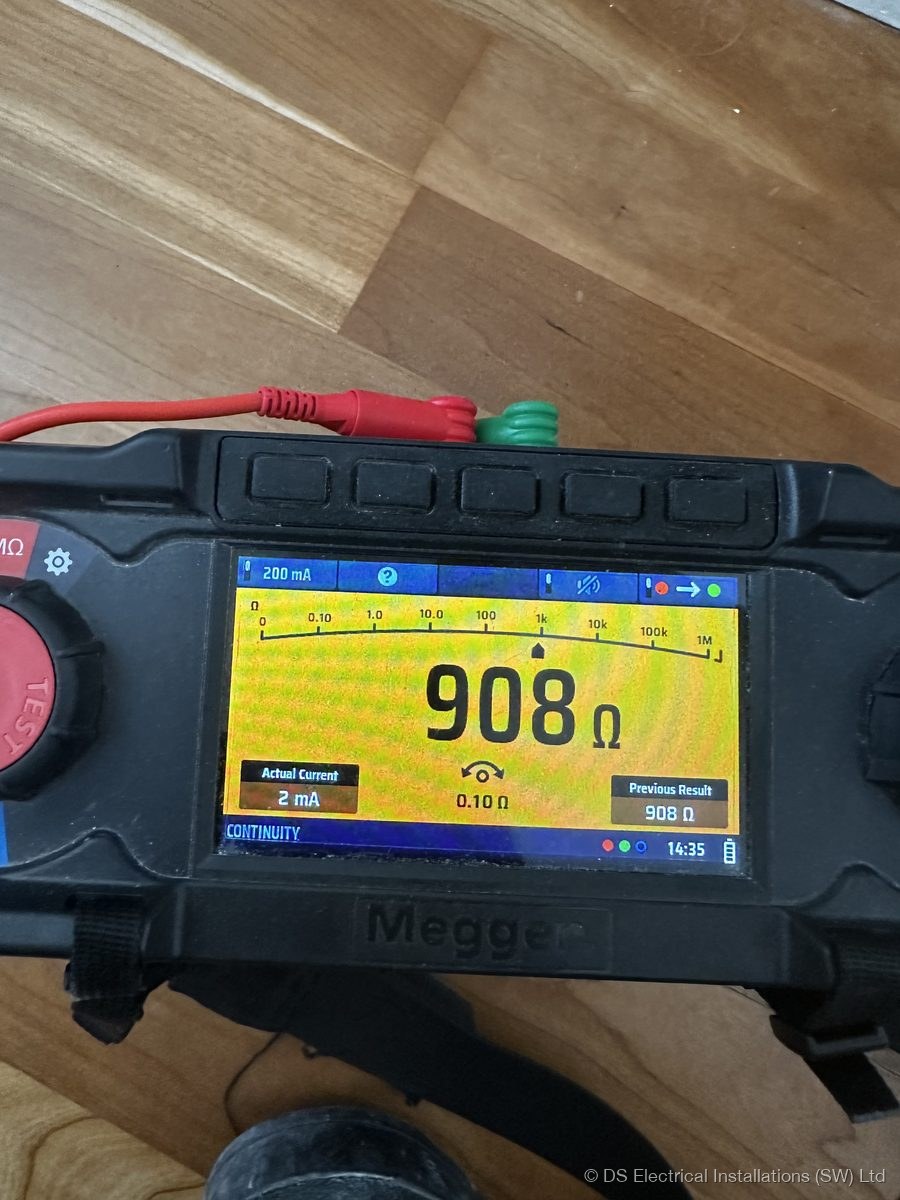
On the tester
Insulation resistance, earth fault loop, RCD trip-time, polarity, continuity — every value taken with a calibrated Megger MFT and recorded against the circuit on your report.
What the price covers
How it works
Every project follows the same five-step process. No surprises, no scope creep.
Further reading
New — 3D install planner
Spec this job on a 3D model of your property — real products, down to the socket finish — and DS Electrical Installations quotes it to your exact specification.
EICR failed?
A C1 (danger present) or multiple C2 (potentially dangerous) codes usually point to deteriorated cabling, no earth on lighting circuits, rewireable fuse boxes or fabric-insulated wiring. Partial or full rewire is the long-term fix. On-site survey, fixed written quote in 48 hours, NAPIT certificate on completion.
Areas we cover
What customers say
“I had a brilliant experience using Dan for a full revamp of the electrics ready for the new kitchen. It was a large project and he explained things clearly and gave me options.”
“Dan and his team did a fantastic job upgrading everything in my flat. Professional, tidy, and excellent quality work throughout.”
“Dan arrived on time, completed the job in a professional and speedy way. There was no mess to clean up. I would highly recommend.”
Get a quote
Landlord, homeowner or business — we’ll get you tested and certified fast.
DS Electrical Installations (SW) Ltd will call you back to talk through the job.