BS 5839-6 Grade D, mains-powered, 10-year sealed battery, fully interlinked. Aico RadioLINK or hardwired, with a heat alarm in the kitchen and CO alarms near gas appliances. Designed, installed and certified to BS 5839-6 in a day. From £180 + VAT @ 20%.
07889 334849 · Dan Stevens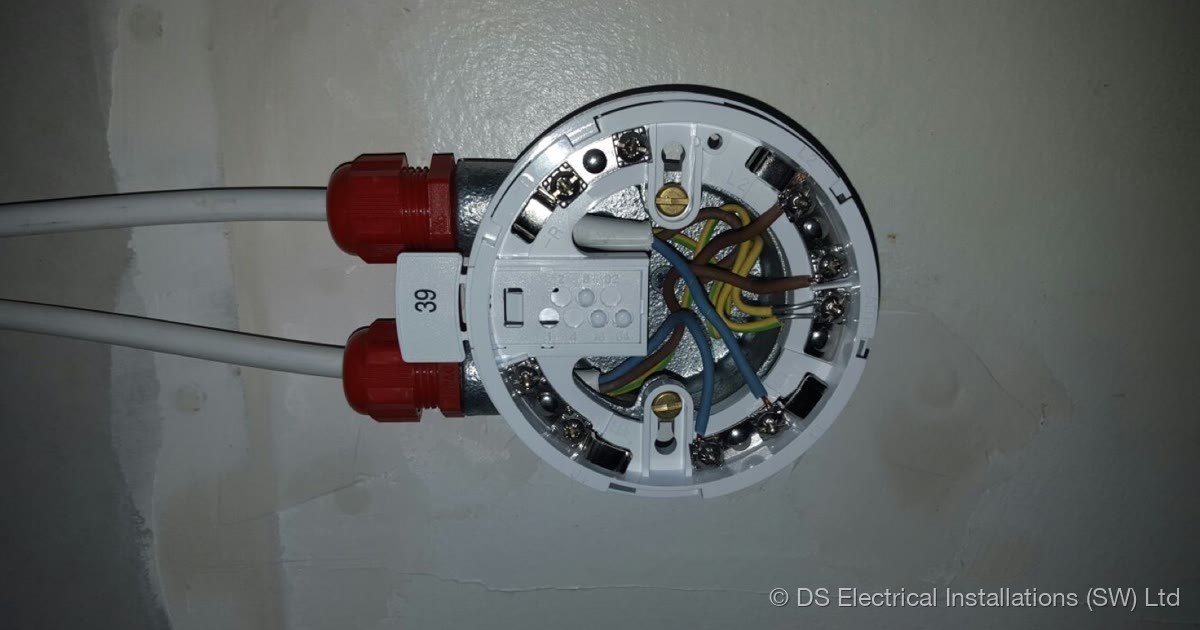
Smoke alarms (BS 5839-6) ≠ Fire alarms (BS 5839-1). This page covers domestic, dwelling-house systems, the kind landlords, HMOs and homeowners need: ceiling-mounted alarms, mains-powered, interlinked, no panel. If you need a commercial fire alarm system, control panel, manual call points, sounders, zones, that's a different standard, see fire-alarms.html.


 TrustMark
 Part P
 BS 7671
The 2022 amendment to the Smoke and Carbon Monoxide Alarm Regulations changed the duty on landlords. Building Regulations changed it for new-builds and material alterations. Old battery-only alarms are no longer acceptable in either case. Five property profiles below cover most of the calls we get.
Smoke and CO Alarm (Amendment) Regulations 2022: at least one smoke alarm on every storey, CO alarm in any room with a fixed combustion appliance. We fit Grade D interlinked, passes every PRS inspection and Selective Licensing scheme.
Most council HMO licences require Grade D interlinked smoke alarms across all storeys plus a heat alarm in the kitchen. We design to your specific licence schedule, install in a day, and provide the certification pack the council demands.
Surveyors flag battery-only alarms in the homebuyer report. Bringing a Grade D system in before you list removes a negotiating lever from the buyer and protects the asking price.
If your only smoke alarms are the screw-on plastic disks with a 9 V PP3 battery in them, they are Grade F, legacy, not landlord-compliant, and statistically much less likely to wake you. Replace with mains-interlinked.
Building Regulations Approved Document B requires Grade D interlinked alarms in any new dwelling, extension, loft conversion or material alteration. We design to plan, install during second-fix, and certify for sign-off.
Every smoke and heat alarm has a 10-year service life printed on the back. Past that, the sensor is unreliable. Check the manufacture date, if it's 2016 or older, plan the replacement now.
Real DS Electrical install, mains-powered ceiling-mounted detector, BS 5839-6 compliant.
The standard isn’t complicated, one device per zone, smoke for circulation, heat for kitchens, CO near combustion appliances. We design the layout from a quick walk-round and fit to plan.
Optical smoke alarm on every storey: hallway downstairs, landing upstairs, top of any further staircase. These are the escape-route detectors, they wake you before fire reaches the only way out.
Living room and any room used as a TV room: optical smoke alarm. The 2022 regs and BS 5839-6 both treat these as principal habitable rooms because they contain ignition sources and soft furnishings.
Heat alarm only, Aico Ei3014 or equivalent. Smoke alarms in kitchens cause constant false alarms from toast and steam, so the standard mandates a heat sensor in the kitchen, interlinked with the smokes.
Carbon monoxide alarm in any room with a fixed combustion appliance: boiler cupboard, room with a gas fire, wood burner room. Hardwired and interlinked into the same system. Excludes gas cookers.
Where the HMO licence demands it (most do for higher-risk lets), an additional smoke alarm goes inside each let bedroom. Specified per the council schedule and your licence conditions.
Permanent unswitched live taken from the consumer unit on its own MCB, separately labelled. So the alarms can’t be turned off at a wall switch and you know which breaker feeds them.
Prices below are typical “from” figures based on RadioLINK retrofit. Hardwired interlink in an existing property usually adds labour because of cable runs through ceilings. Final price comes after a free survey or photo-based phone consult. £99 isn’t the model here, the survey is free.
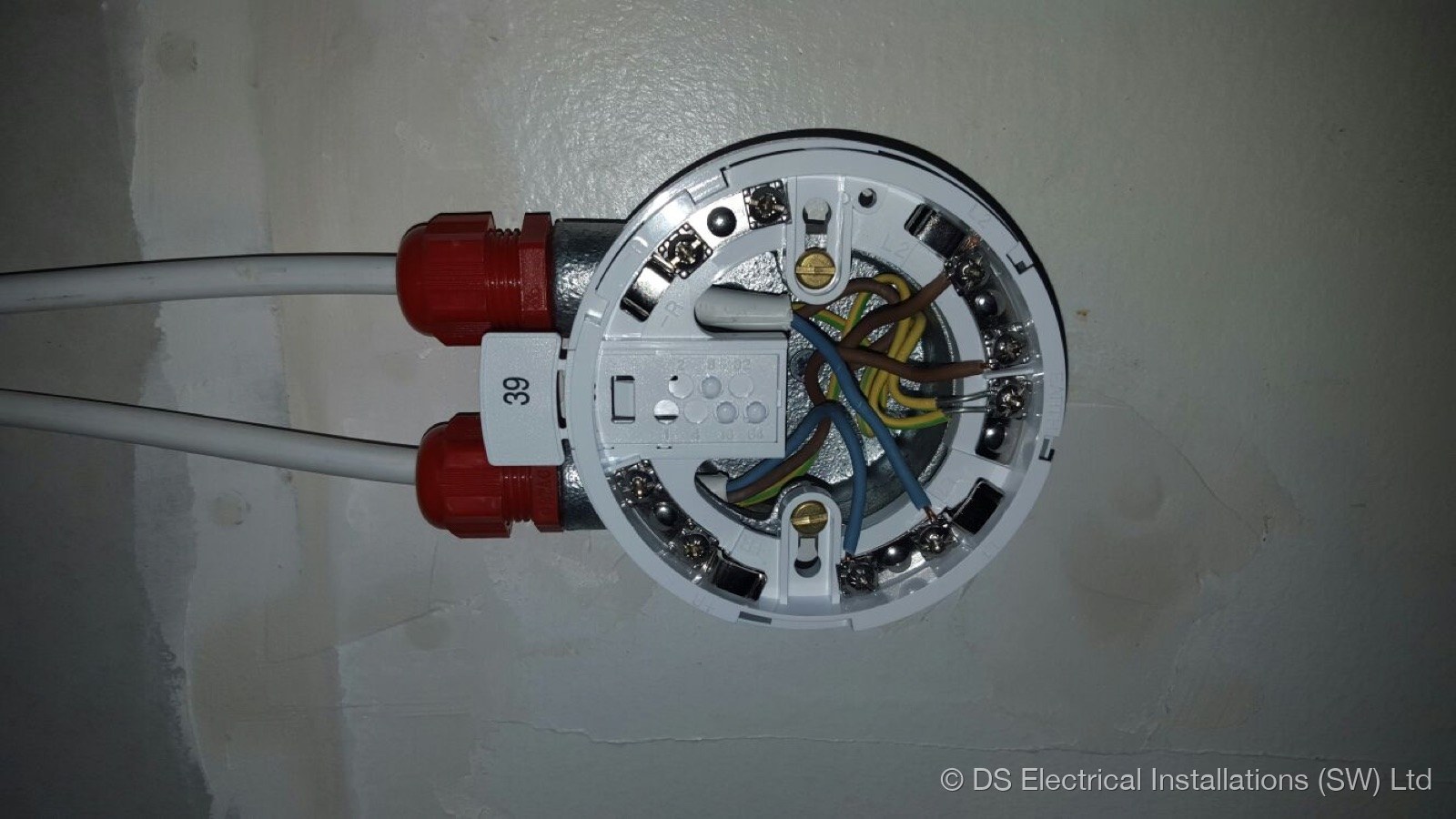
Most domestic installs are a single-day job: arrive at 8, design the layout, run the cables or commission the RadioLINK modules, test every alarm, hand over the certification pack and walk the tenant or homeowner through every device before we leave.
Free survey or photo-based phone consult, we walk every storey, mark up smoke / heat / CO positions on a layout sketch, and confirm with you in writing before any work starts. No surprises on the day.
Dedicated lighting circuit at the consumer unit, ceiling-mounted bases, alarm heads paired and interlinked, every device tested with the test button and a smoke spray. Electrical Installation Certificate (EIC) and Part P notification through NAPIT.
Before we leave we walk the tenant or owner through every alarm: how to test, how to silence a nuisance trigger, what each LED colour means. Written service register with each alarm’s location, model, serial number and manufacture date for the 10-year replacement cycle.
BS 5839-6 is the British Standard for fire detection and alarm systems in domestic premises (houses, flats, HMOs). For most rented and modern homes you need Grade D, mains-powered alarms with a sealed back-up battery, fully interlinked, so that any one alarm triggering sounds every alarm in the property. Grade A (a full panel-based system with manual call points) is the commercial standard and covered under BS 5839-1, that’s our fire-alarms page. Grade F (battery only) is no longer acceptable for landlord/HMO duties or for new sign-offs. We design and install Grade D every time unless an HMO licence demands otherwise.
In England, the Smoke and Carbon Monoxide Alarm (Amendment) Regulations 2022 (in force from 1 October 2022) require landlords in both private and social rented sectors to fit at least one smoke alarm on every storey of a rented property used as living accommodation, and a CO alarm in any room with a fixed combustion appliance (excluding gas cookers). For owner-occupied homes there is no blanket retrofit law, but Building Regulations Approved Document B requires Grade D interlinked alarms in any new build, extension, loft conversion or material alteration. HMO licensing schemes (run by your local council) typically require Grade D interlinked across all storeys plus a heat alarm in the kitchen.
Both are fully BS 5839-6 Grade D compliant. Hardwired interlink uses a 3-core-and-earth cable between every alarm so the trigger signal travels down the cable, clean, neat, but requires lifting floors or chasing walls in an existing house. RadioLINK (Aico Ei3024 base + Ei100MRF module, or equivalent) uses an encrypted 868 MHz radio link between alarms instead, so each alarm only needs a permanent live feed at the ceiling rose. RadioLINK is the standard choice for retrofit because it avoids tearing up plaster and carpet, same compliance, much less mess and cost, finished in a day.
Optical and ionisation sensors degrade over time. Manufacturers (Aico, Kidde, Hispec, FireAngel) all specify a 10-year service life from the date of manufacture printed on the unit, after that the sensor is unreliable and the alarm must be replaced, even if it still beeps when you press test. We fit 10-year sealed-battery models so there’s no annual battery change for the homeowner or tenant, the whole alarm is replaced as a 10-year cycle. Heat alarms have the same 10-year service life. We label every alarm we fit with the install date and give you a written service register.
Mains-powered smoke and heat alarms are part of the fixed electrical installation, so the install is notifiable work under Part P of the Building Regulations (England & Wales). It must be carried out by a competent electrician registered with a Part P scheme (NAPIT, NICEIC, ELECSA or equivalent). DS Electrical is NAPIT registered (number 66245), every install we do is notified to your local Building Control automatically through NAPIT and you receive an Electrical Installation Certificate (EIC) for the new circuit, plus a written service register listing each alarm location, model, serial number and date of manufacture.
Further Reading
Free survey, written quote, install in a day, full certification pack. Phone or WhatsApp DS Electrical direct, no call centre, no chase-up.
07889 334849