BS 7671 Section 701 special locations, IP44+ everywhere, 30mA RCD on every circuit, careful zone planning before a single hole is drilled. Extractor fans, IP-rated downlights, shaver sockets, electric showers, heated towel rail circuits, mirror lights. From £120 + VAT @ 20%.
Bathroom-rated downlights → IP65 zone-compliant fittings from £180 + VAT.
07889 334849 · Dan Stevens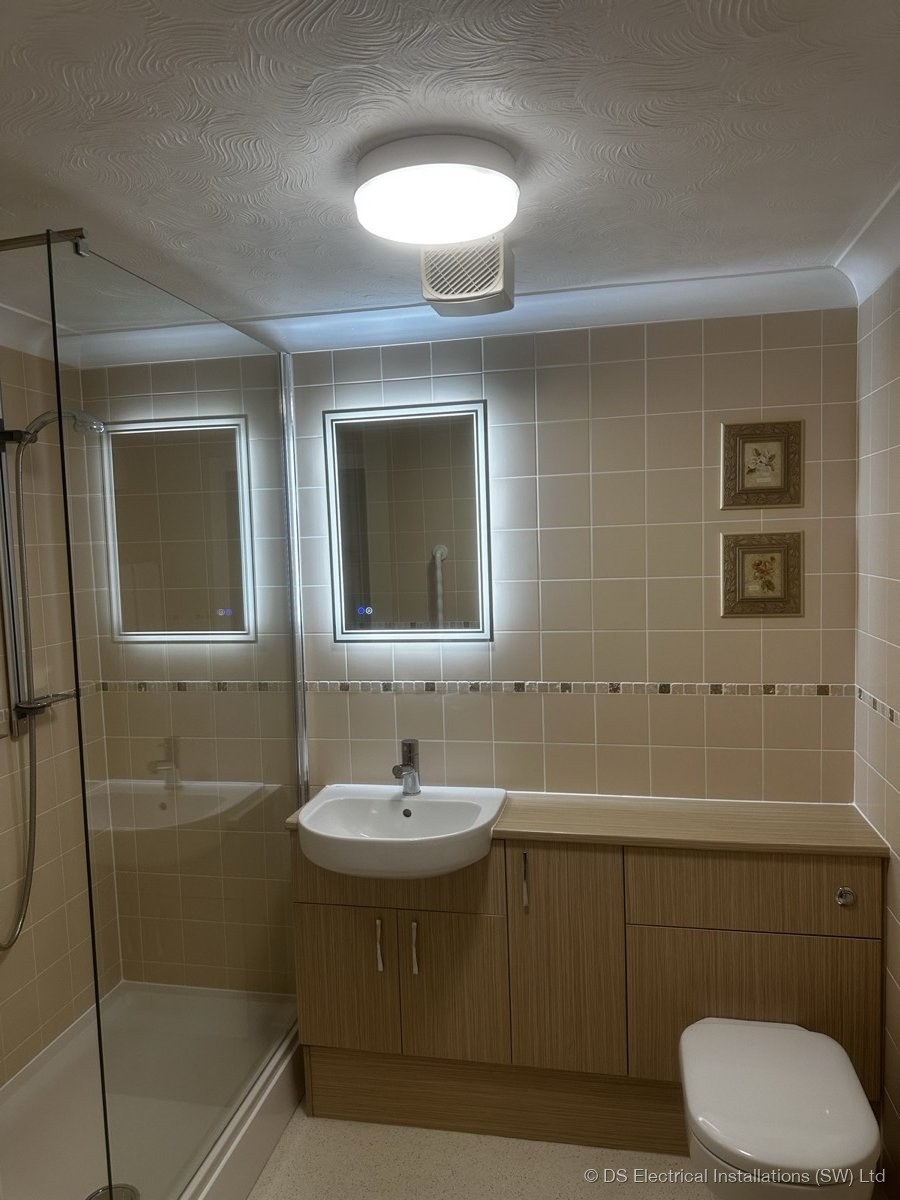



 TrustMark
 Part P
 BS 7671
Bathrooms are governed by Section 701 of BS 7671 because water and electricity meet on the user’s skin. The room is split into four zones with progressively relaxed IP ratings as you move away from the bath or shower. Get this wrong and the install is non-compliant; the fitting will eventually fail; and any insurance claim is at risk.
Submersion zone. Only Separated Extra-Low Voltage (12V) fittings rated IPX7 are permitted, in practice, almost nothing goes here.
Splash and direct-spray zone. Mains-voltage fittings allowed if rated IPX4+ and protected by a 30mA RCD. No socket-outlets except shaver units.
Splash zone. Same minimum rating as zone 1. Shaver socket-outlets to BS EN 61558-2-5 are permitted; standard sockets are not.
Standard fittings allowed, but every circuit serving the room must still be on a 30mA RCD. Switch and isolator placement matters.
Real DS Electrical install, IP-rated LED mirror, zone-compliant lighting.
No corner-cutting. Whether it’s a single fan replacement or a full refurb, the standard is the same. Every fitting is correctly IP-rated for its zone, every circuit is RCD-protected, every isolator is sited where it needs to be, and the paperwork lands on your inbox before the van leaves. Shaver sockets, fan-isolators and pull-cords are fitted in the Click (Scolmore) Deco / Deco Plus screwless metallic range as default, chrome, brass, antique brass or brushed steel, with period-style brass or bronze accessories supplied via trade account where specified.
Before a hole is drilled we mark up zones 0, 1 and 2 against your bath / shower / basin layout, then specify fittings and IP ratings to match. No guesswork on the day.
Every accessory needing isolation gets a fan-isolator or pull-cord sited outside zone 2, usually just outside the bathroom door. Compliant and easy to use.
Every circuit serving the bathroom is RCD-protected at 30mA, an absolute requirement of Section 701, regardless of zone.
Electrical Installation Certificate (or Minor Works Certificate for smaller jobs) issued, plus NAPIT Part P notification lodged with Building Control where notifiable.
Plates and fittings sit flush, screws are level, silicon seals are crisp. We work with bathroom fitters often, the electrics shouldn’t look like an afterthought.
Cable, fixings, isolator switches, junction boxes, certification, Part P notification, all included in the fixed price. The price you’re quoted is the price you pay.
Final price depends on access, existing wiring, fitting choices, and whether the bathroom is being refurbed at the same time. Survey is free; written quote is fixed. Read the disclaimer below the cards before assuming.
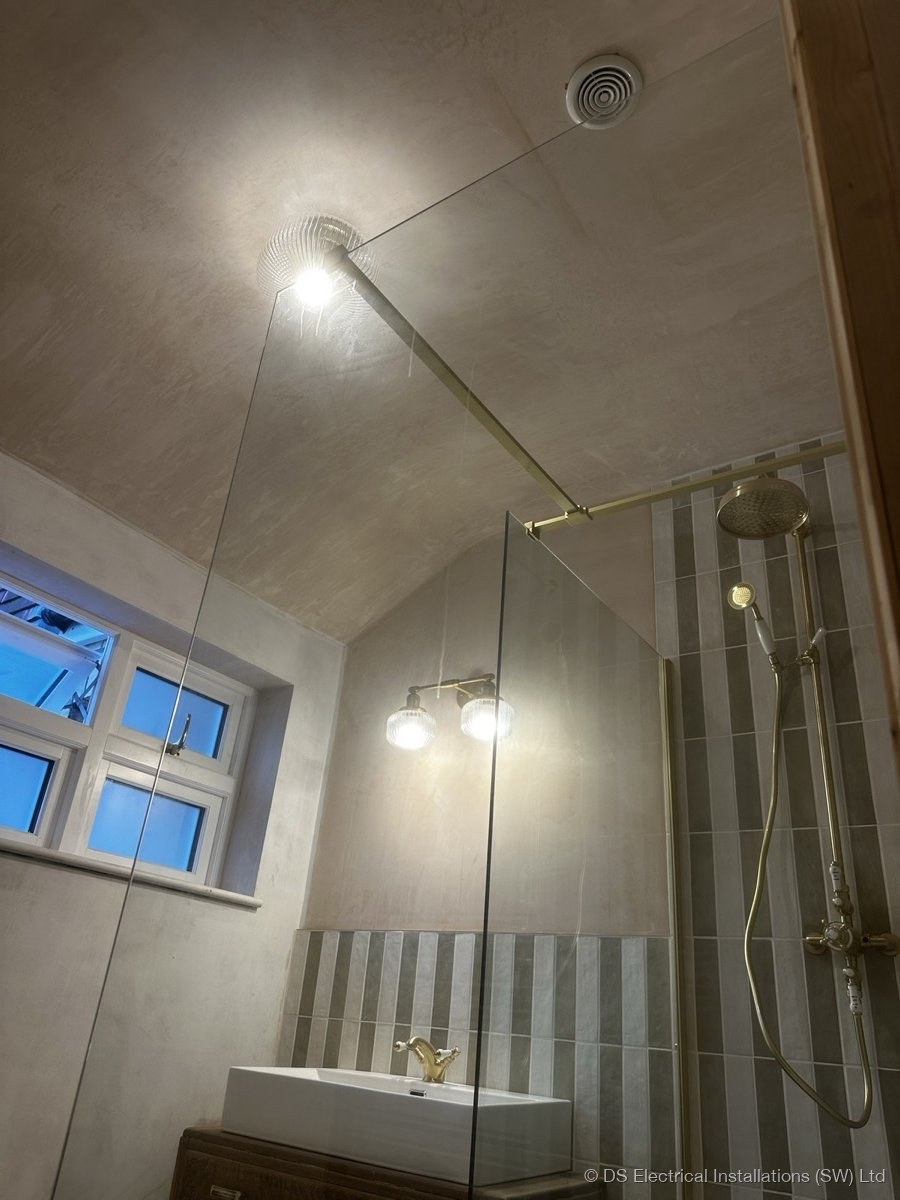
New-build en-suites, contemporary family bathrooms, period properties with brass fittings and stone walls, the rules are the same, the design just adapts. We work with bathroom fitters across Wells, Bath, Frome and the surrounding villages, joining the programme at first fix and again at second fix.
BS 7671 Section 701 splits a bathroom into four zones. Zone 0 is the inside of the bath or shower tray itself, only 12V SELV permitted. Zone 1 is directly above the bath or shower up to 2.25m, IPX4 minimum, IPX7 for items below the spillover. Zone 2 is a 0.6m horizontal arc around zone 1 (and around the basin), IPX4 minimum. Outside zones is everything else in the room, standard fittings allowed but every circuit must still be on a 30mA RCD. We design each bathroom to those exact zones before we order any fittings.
If the bathroom has no openable window, yes, Building Regulations Part F requires mechanical extract ventilation at 15 l/s (intermittent) or 8 l/s (continuous). If you do have an openable window it is technically optional, but we strongly recommend one anyway: bathroom moisture is the single biggest cause of mould, peeling paint and damaged plaster. We wire to a fan-isolator switch outside zone 2, with overrun timer and humidistat where the layout allows.
Yes, but only IP65 (or higher) sealed LED downlights, fed from a 30mA RCD, with the driver mounted outside the zone. We do not use cheap import downlights for bathrooms, the IP rating is meaningless if the seal degrades after 18 months. Recessed fittings also need fire-rated hoods if the ceiling is a separating floor (typical in flats and houses with rooms above). All of that is part of the design.
From a wiring point of view: a 9.5kW or 10.5kW electric shower needs its own dedicated circuit, typically 10mm² cable to a 50A RCBO on the consumer unit, plus a ceiling-pull isolator outside zone 2. That’s a notifiable Part P job. A combi-boiler-fed mixer shower needs no new electrics at all, just plumbing. Combis give better flow and are usually cheaper to run; electric showers give independence from the boiler and a guaranteed (smaller) flow even when other taps are open. We’ll talk through both options on the survey.
Yes. New circuits in bathrooms (special locations under Part P Schedule 4) are notifiable to your local Building Control. We notify automatically through our NAPIT registration, you do not need to apply separately. Every job ends with an Electrical Installation Certificate or Minor Works Certificate, plus the NAPIT compliance certificate logged on the national database. Accepted by insurers, mortgage lenders and surveyors.
More questions? See our full FAQ →
If you’re booking a bathroom fitter, get the electrics quoted at the same time, first-fix wiring is much cheaper before tiles go on. Free survey, fixed quote, NAPIT certified.
07889 334849