Kitchen & bathroom electrics
Cooker and appliance circuits, worktop sockets, LED and under-cabinet lighting, zone-rated bathroom electrics, extractors and heated mirrors — all Part P certified.



 TrustMark
 Part P
 BS 7671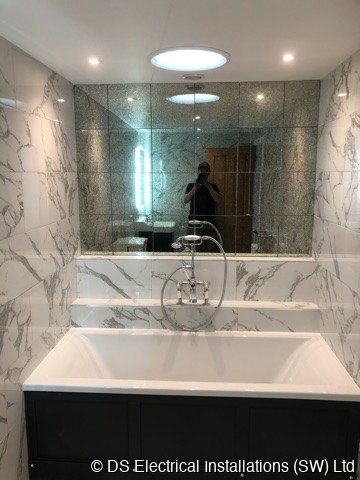
Where electrics really show
These rooms are unforgiving — everything is on show and the regs are strict. We plan circuits and lighting so the finish is flawless and fully compliant.
What we do
Dedicated cooker, hob, oven and appliance circuits.
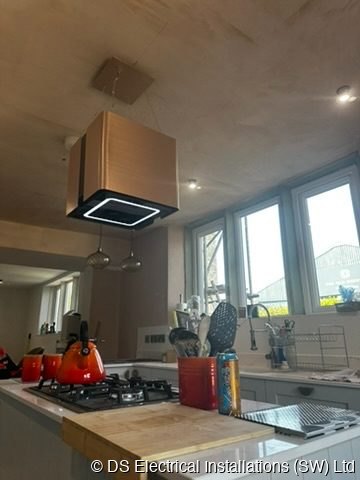
Island extractors, Quooker and integrated appliance power.
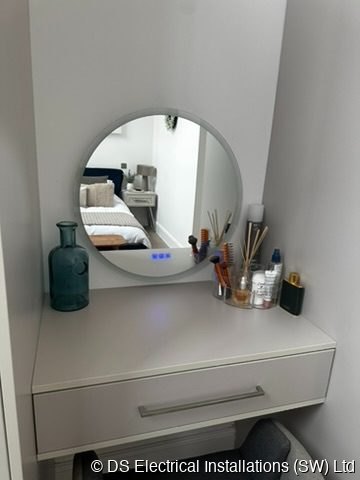
IP-rated zoned lighting and LED heated mirrors.
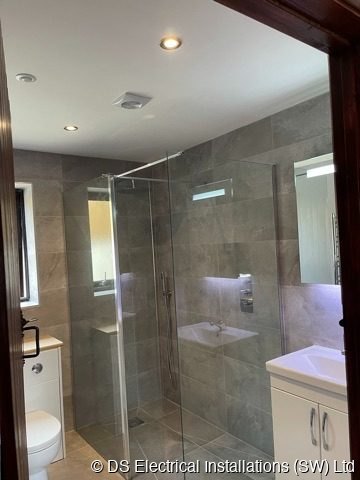
Electric showers and correctly zoned bathroom electrics.
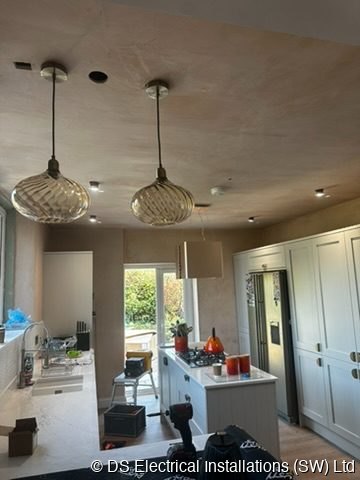
Lit to look right
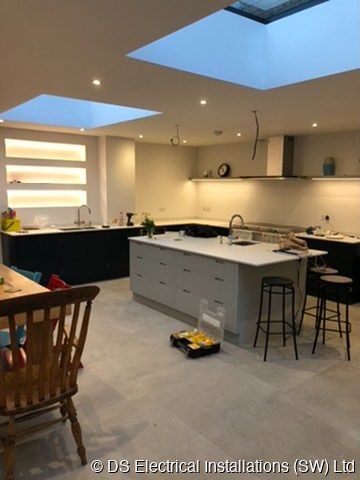
Layered downlights, warm pendants and under-cabinet strips — planned so the kitchen works for cooking and for evenings.
See kitchen projects →FAQ
Yes — bathrooms are split into zones and fittings must be correctly IP-rated for their zone. We install zone-appropriate lighting, extractors and shaver points, all Part P notified.
We do full kitchen electrics — appliance and cooker circuits, worktop sockets, LED and under-cabinet lighting — coordinated with your fitter.
Yes, on a dedicated, correctly rated and protected circuit, tested and certified.
Most full kitchen electrics jobs take between one and three working days on site, depending on scope. A simple refresh — pendant, downlights, a few extra worktop sockets, replacement cooker isolator — is usually one day. A typical kitchen refurb with new cooker circuit, induction hob, dedicated dishwasher and washing-machine spurs, downlights, under-cabinet LED and Quooker spur is two days first-fix and one day second-fix, ideally split around the kitchen fitter's programme. We co-ordinate with the kitchen fitter so cables are in the wall before the units land and second-fix happens after worktops are installed.
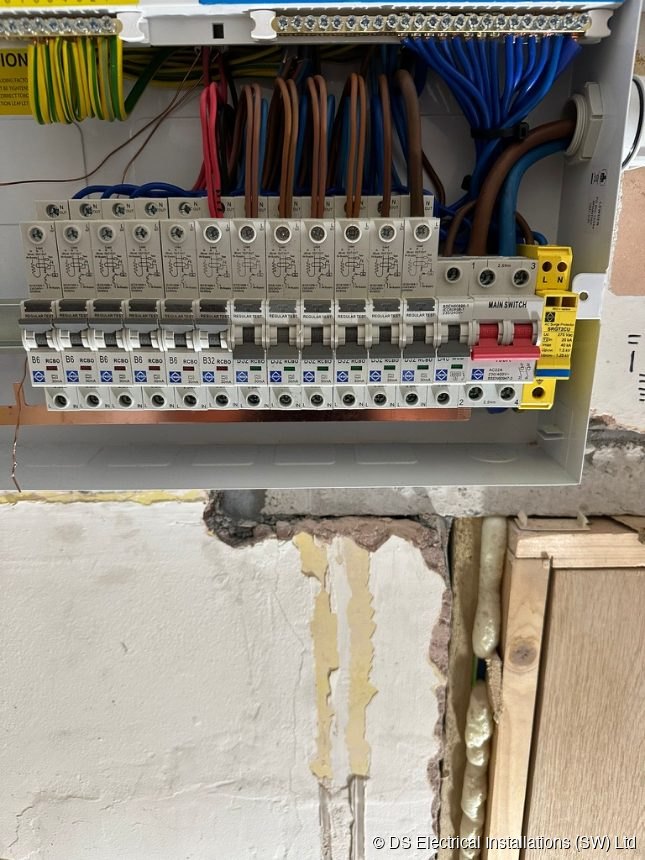
Often, yes. Adding new circuits in a kitchen — a dedicated cooker circuit, a separate ring main, a Quooker spur, an induction hob — triggers Part P notification, and any new circuit must be on a 30mA RCD (typically a per-circuit RCBO). If the existing consumer unit is a rewireable-fuse board, a split-load with shared RCDs, or has no spare ways, we'll usually recommend upgrading at the same time. It's much cheaper to do both jobs together than to come back. We'll tell you straight on the survey whether it's needed or not — see our fuse board upgrade page for what that involves.
Yes — sockets, USB-A/C, hob, even induction-extractor downdraft units can all sit in a kitchen island. The cabling has to be planned at the slab/floor stage because once the island is built and the worktop is on, retrospective cable runs are very disruptive. We mark up the island plate or floor before screed/tiles, drop conduit or cable up through the carcass, and second-fix sockets and isolators when the worktop is in. Worktop sockets in islands cannot sit above the hob and must be at least 300mm from any sink edge — same as the rest of the kitchen.
Integrated appliances need dedicated above-worktop isolators because once the unit is built in, you can't reach the plug to switch it off in an emergency. We fit a labelled grid switch (or individual fused switched-spurs) above the worktop — typically four switches: dishwasher, washing machine, fridge-freezer, waste disposal — wired down to a fused connection unit behind the appliance. That way every appliance can be safely isolated without pulling the unit out. Standard practice on every kitchen refurb we do.
Every job ends with paperwork. New circuits get an Electrical Installation Certificate (EIC) under BS 7671. Smaller alterations get a Minor Works Certificate. Either way, where Part P notification is required (any new circuit, any work in a special location), we lodge the notification automatically through our NAPIT registration — you do not need to apply separately. You'll receive PDF copies of the certificate and the NAPIT compliance certificate from the national database, which is what insurers, mortgage lenders and surveyors look for.
We do the electrical side — running a dedicated 13A spur with isolator switch above the worktop down to a fused connection unit behind the unit, sized correctly for the Quooker tank. Plumbing connections (water inlet, filter, waste) are done by the kitchen fitter or plumber — not our trade. We're often booked alongside the plumber to make sure the tap is electrically and hydraulically ready on the same day. Same approach for instant-hot-water taps from any other manufacturer.
More from DS
What we wire · Every kitchen circuit
Kitchens aren’t a special location like bathrooms — there’s no zone diagram — but almost every circuit in here runs near full load and several can run simultaneously: oven and hob mid-roast while the dishwasher, washing machine, fridge, kettle and Quooker are all live. The wiring has to be planned for the worst case, not the average. Switches, sockets and grid-switch isolators are fitted in the Click (Scolmore) Deco / Deco Plus screwless metallic range as default — chrome, brass, antique brass or brushed steel — with period brass or bronze accessories supplied via trade account where specified.
Dedicated radial to a 45A cooker control unit, sized to the appliance rating. Heat-resistant LSF/LSZH cable behind the hob run.
Most induction hobs are 7.2kW+ — a separate dedicated circuit, not shared with the oven. RCBO-protected at the consumer unit.
Separate ring just for the kitchen, sized for high simultaneous load. Min. two doubles per 3m of worktop, never above the hob, never within 300mm of a sink edge.
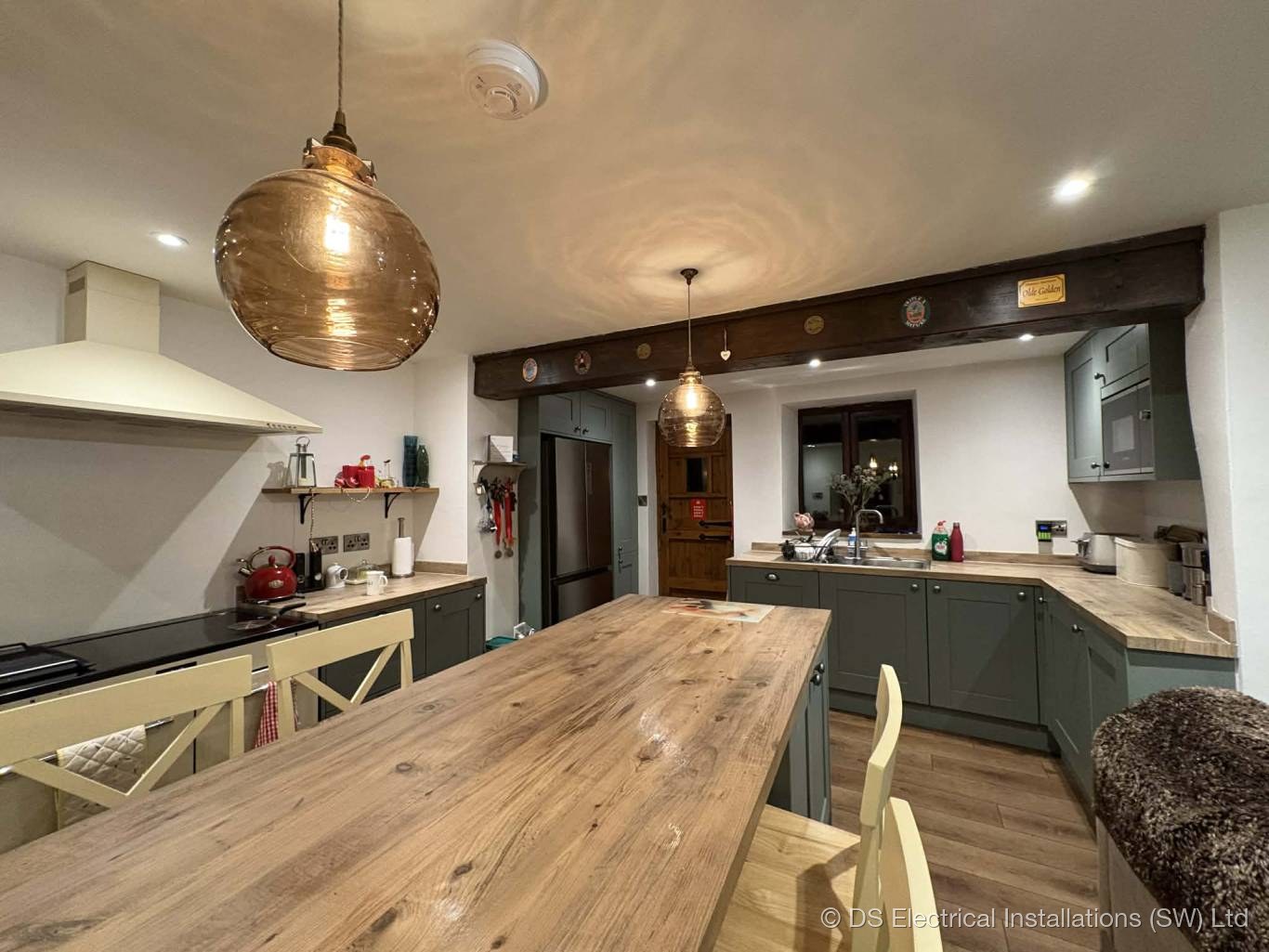
Layered lighting design: ambient downlights, statement pendant over island or table, fire-rated hoods where the ceiling separates floors. Two-way switched.
LED strip or bar under wall units for task lighting. Driver mounted in a vented top cupboard, switched at the worktop or via a sensor.
Cooker hood or downdraft extractor on its own switched fused spur with run-on timer. Sized for the kitchen volume; ducted to outside, not recirculated where possible.
Dedicated spur with isolator switch above the worktop down to a fused connection unit behind the cabinet. Sized to the tank rating, RCD-protected.
Heat detector (not smoke) above the kitchen door, interlinked with the rest of the dwelling’s smoke alarms. BS 5839-6 Grade D2 LD2 minimum.
When you need a kitchen rewire
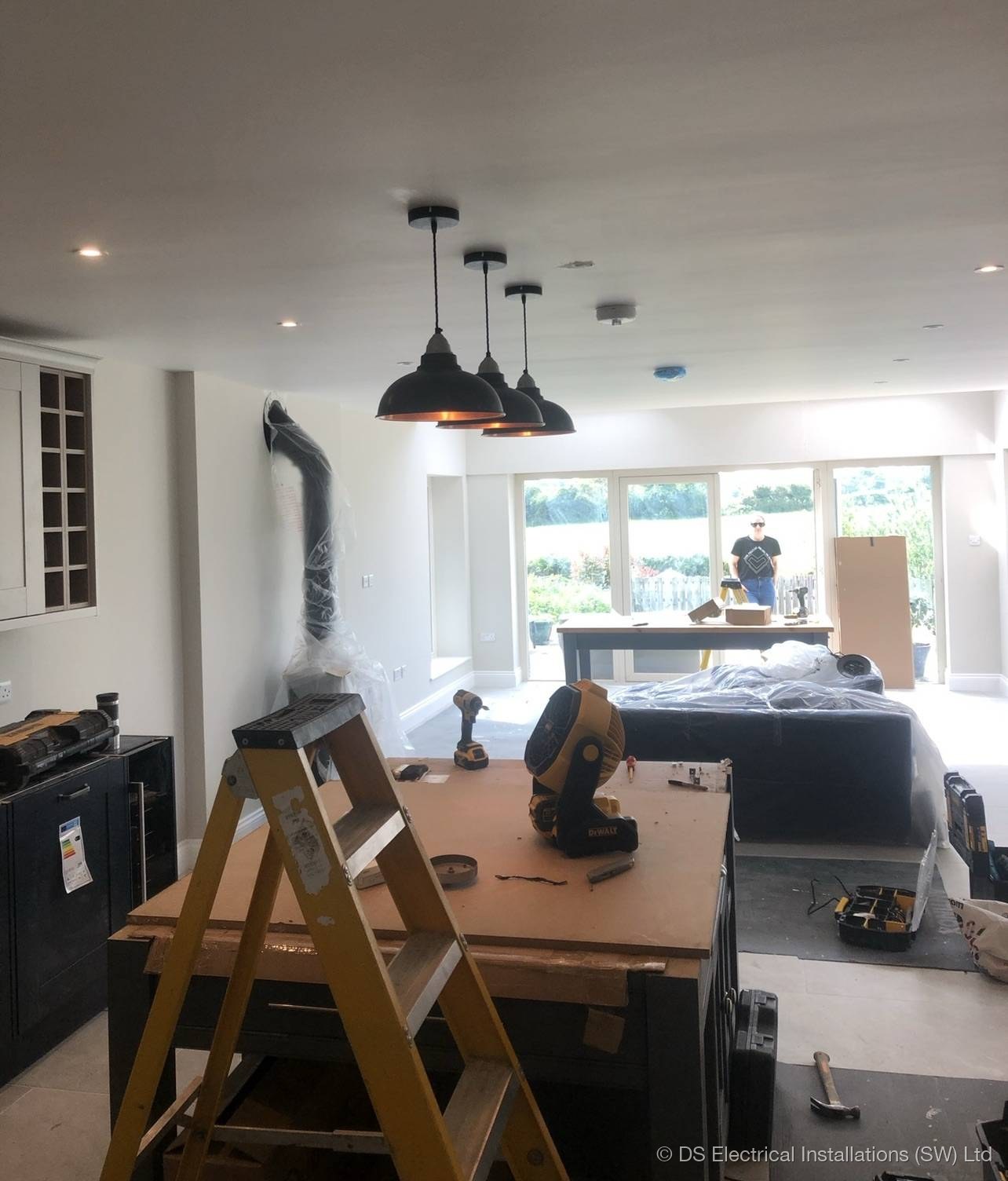
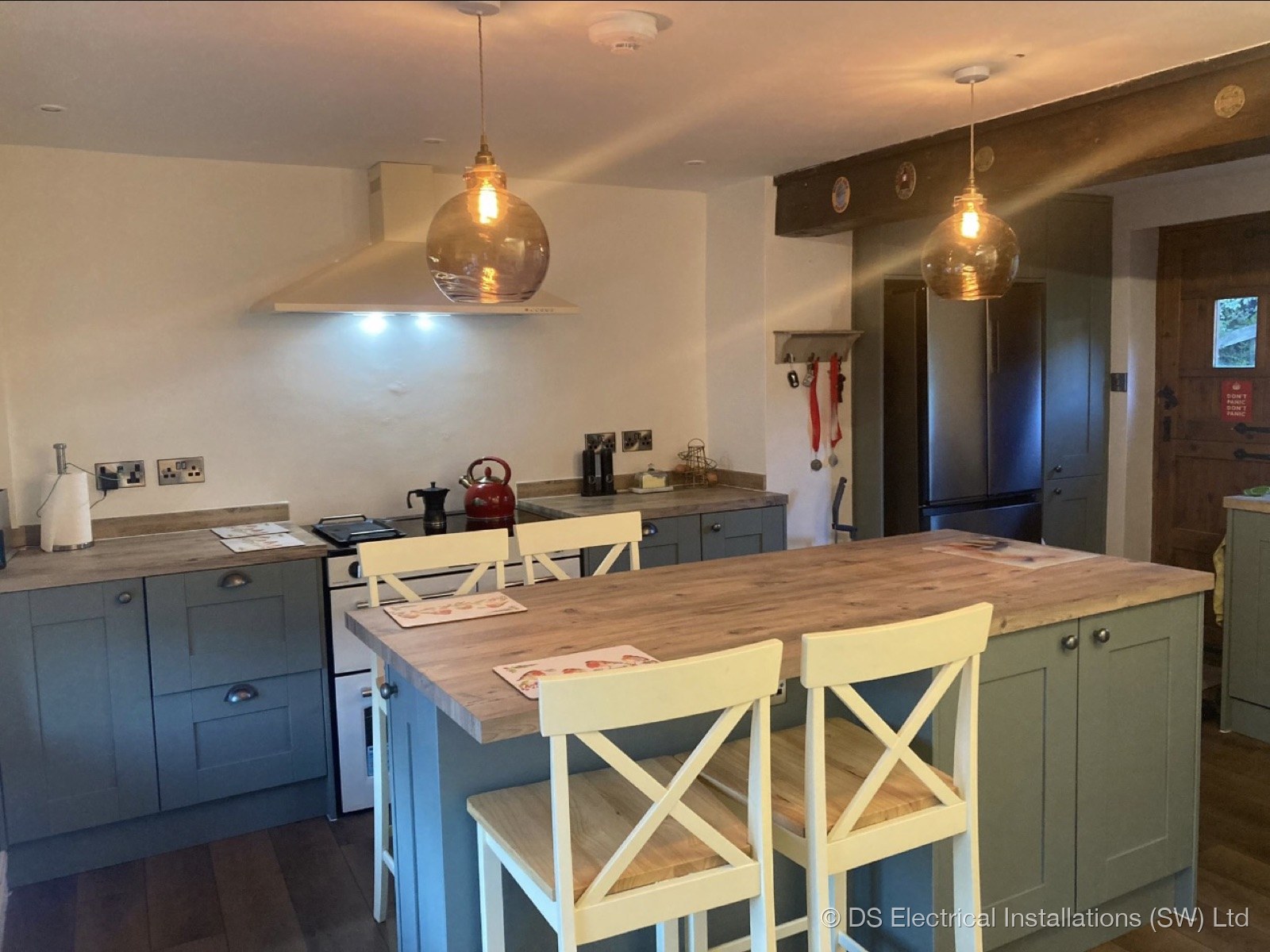
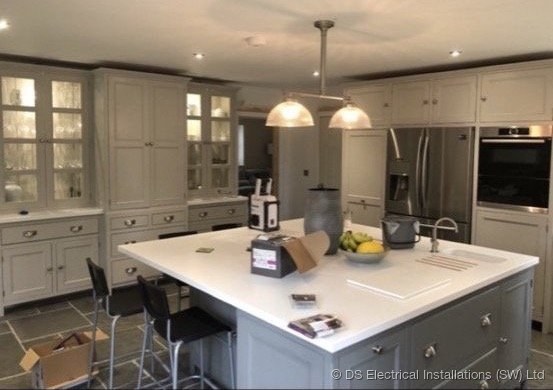
Real DS Electrical install — pendant lighting, downlight design, dedicated circuits.
How it sits with the rest
A kitchen refurb usually triggers a consumer unit upgrade — new circuits need 30mA RCD protection and the old board often runs out of ways. Lighting design is normally part of the same brief, so we co-ordinate with our lighting service to specify ambient + task + statement layers in one design pass. The kitchen heat detector ties into your dwelling-wide smoke alarm system for full BS 5839-6 compliance. And if the existing wiring is dated, this is the right moment to discuss a partial or full rewire rather than patch and hope.
Indicative pricing · from · VAT extra
Final price depends on access, cable routes, existing wiring and whether the kitchen is being refurbed at the same time. Survey is free; written quote is fixed. Read the disclaimer below the cards before assuming.
Quote on the day, no obligation. A kitchen survey takes 25-40 minutes. We measure cable routes, agree fitting positions against your kitchen plan, walk through what’s notifiable, and write you a fixed price. If it’s a kitchen-fitter programme, we’ll co-ordinate first-fix and second-fix around tile / worktop / handover dates — request a survey.
All prices indicative. Every price shown on this page is a “from” figure to give you a rough idea of cost. We don’t list-price work because no two jobs are the same — building age, access, existing wiring, scope, materials and time on site all change the price. We always give you a written quote after a free site survey or phone consultation, with VAT @ 20% on a separate line. Call 07889 334849 for a quote on your specific job.
One standard, every job
New-build extensions, period property kitchens with stone walls, contemporary refurbs with islands and Quookers — the standard is the same: design first, dedicated circuits where they matter, every appliance properly isolated, certified and Part P notified before we leave. We work with kitchen fitters across Wells, Bath, Frome and the surrounding villages.
How it works
From first phone call to handover, the process we run for every kitchen job, big or small. Free survey, fixed quote, paperwork on completion.
Further reading
Kitchen electricians by area
Local pricing, postcodes and area-specific guidance for every Mid-Somerset town we cover. Tap the town closest to your kitchen.
What customers say
“I had a brilliant experience using Dan for a full revamp of the electrics ready for the new kitchen. It was a large project and he explained things clearly and gave me options.”
“Dan and his team did a fantastic job upgrading everything in my flat. Professional, tidy, and excellent quality work throughout.”
“Dan arrived on time, completed the job in a professional and speedy way. There was no mess to clean up. I would highly recommend.”
Get a quote
Tell us the layout and finish — we’ll spec and price the electrics.
DS Electrical Installations (SW) Ltd will call you back to talk through the job.