Mains-powered smoke, heat and carbon monoxide alarms for Shepton Mallet houses, flats and rented homes, linked so that one alarm sounding sets off every other. We plan the layout floor by floor, fit Aico alarms with sealed 10-year back-up batteries, test each one and certify the electrical work. Each home is priced individually, fixed in writing before we start.
A lot of the housing in the middle of Shepton Mallet is stacked rather than spread out. The Victorian stone terraces in the centre and the Georgian townhouses on Town Street often run to three floors, sometimes with an attic room on top, and the kitchen is frequently at the back on the ground floor. Thick stone walls and solid timber floors are good at keeping noise in, which is exactly what you do not want from a smoke alarm.
A single battery alarm in the hall of a three-storey house can sound for some time before anyone asleep on the top floor hears it. That is the case for interlinking: when the kitchen heat alarm or the hall smoke alarm detects something, every alarm in the house sounds together, including the one outside the bedroom door.
So when we plan a Shepton house we count storeys and escape routes first, then rooms. The staircase is usually the only way out, and the alarms are placed to protect it.
Every house is walked round before we fix anything, but a terraced house of this shape usually ends up looking like this:
One point that catches landlords out: under the alarm regulations a bathroom or toilet counts as living accommodation, so a half-landing or top floor with only a bathroom on it still needs a smoke alarm on that storey. The alarm goes on the landing, not inside the bathroom.
Every alarm in the layout is mains-powered from a permanent unswitched supply, so nobody can turn the alarms off at a light switch, and each has a sealed lithium back-up battery for power cuts. Domestic layouts follow BS 5839-6 Grade D.
We quote each home on its own merits. A three-storey terrace often needs more alarms than the bedroom count suggests, an HMO needs a full alarm design, and the choice between RadioLINK wireless and hardwired interlink affects the labour. You get a fixed written price after we have seen the house or your photos.
There are two ways to connect the alarms together, and the house decides which one is sensible.
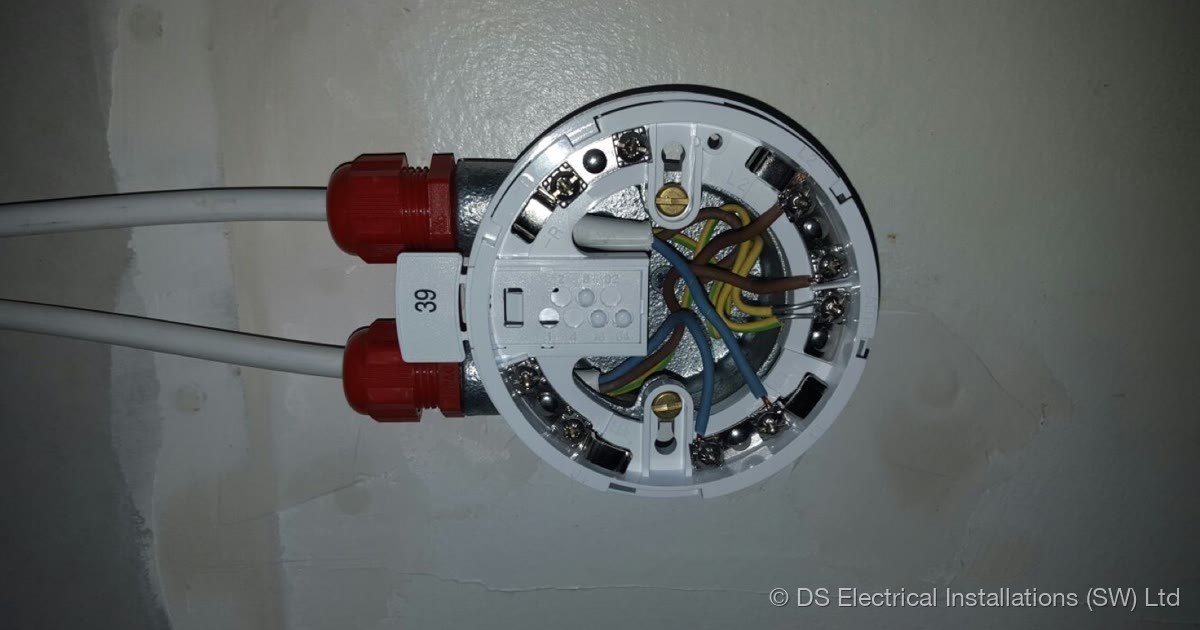
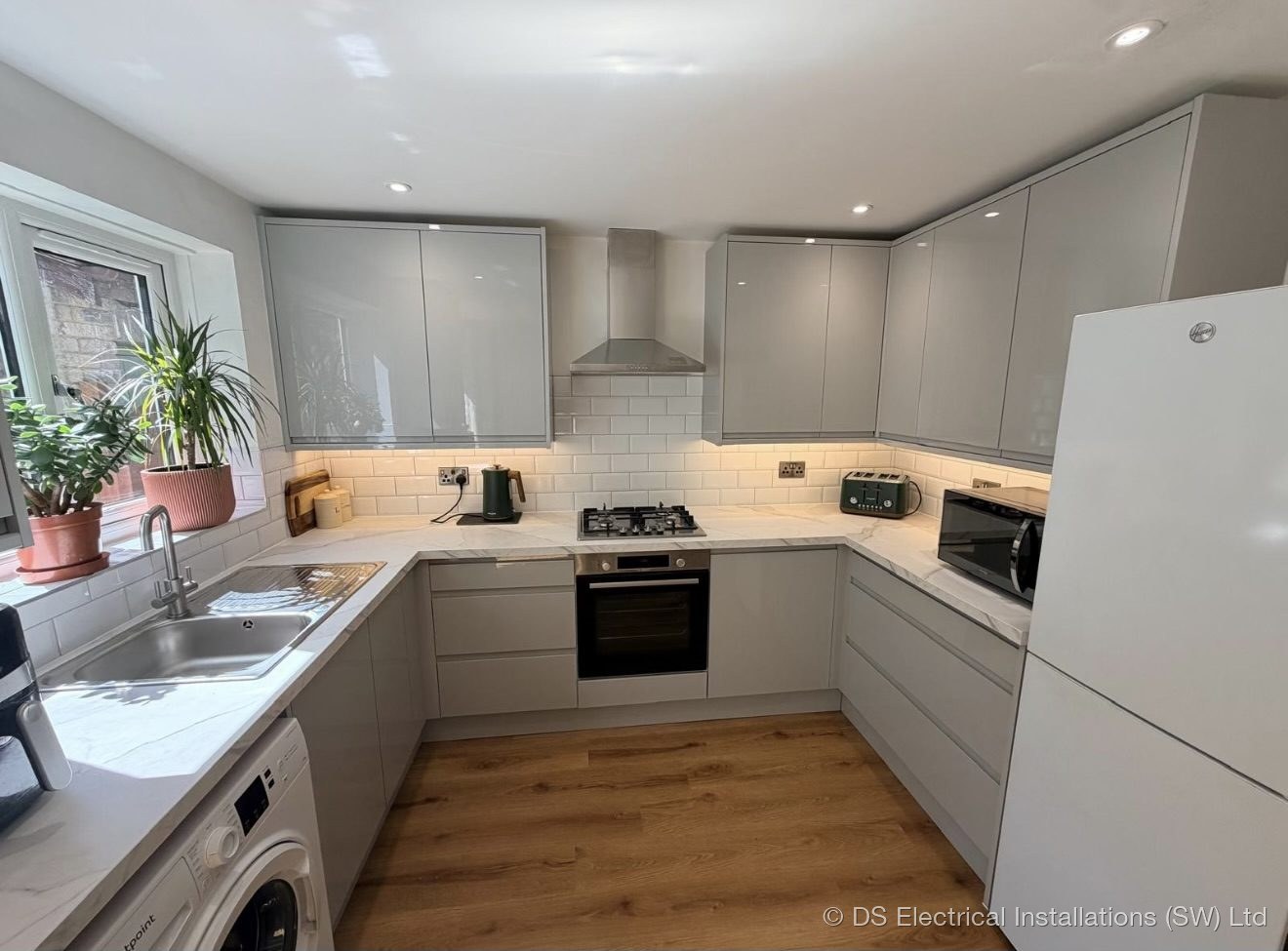
Hardwired interlink uses a cable between each alarm. It suits a house that is empty, being rewired, or has an accessible loft above the points that need linking. One of our Shepton Mallet jobs this year was a two-alarm version of exactly that: a mains optical smoke alarm in the hall and a heat alarm in the kitchen, joined by a cable run through the loft, with a new kitchen socket added on the same visit.
RadioLINK is Aico's wireless interlink. Each alarm still runs on mains power, but the alarms talk to each other by radio, so there is no cable to run between floors and no floorboards to lift. In a lived-in three-storey terrace with finished decoration on every floor, that is usually the cleaner answer. Our package prices are based on RadioLINK; hardwired interlink in an occupied house usually adds labour.
Two separate sets of rules apply to most private lets in England, and it is tidier to deal with them on one visit.
The Smoke and Carbon Monoxide Alarm (England) Regulations 2015, as amended in 2022, require a smoke alarm on each storey that has a room used wholly or partly as living accommodation, and a carbon monoxide alarm in any such room containing a fixed combustion appliance other than a gas cooker. The alarms must be checked as working on the day a new tenancy starts, and repaired or replaced when a tenant reports a fault. The law does not say whether alarms should be mains or battery. We recommend, and fit, mains alarms with sealed back-up batteries.
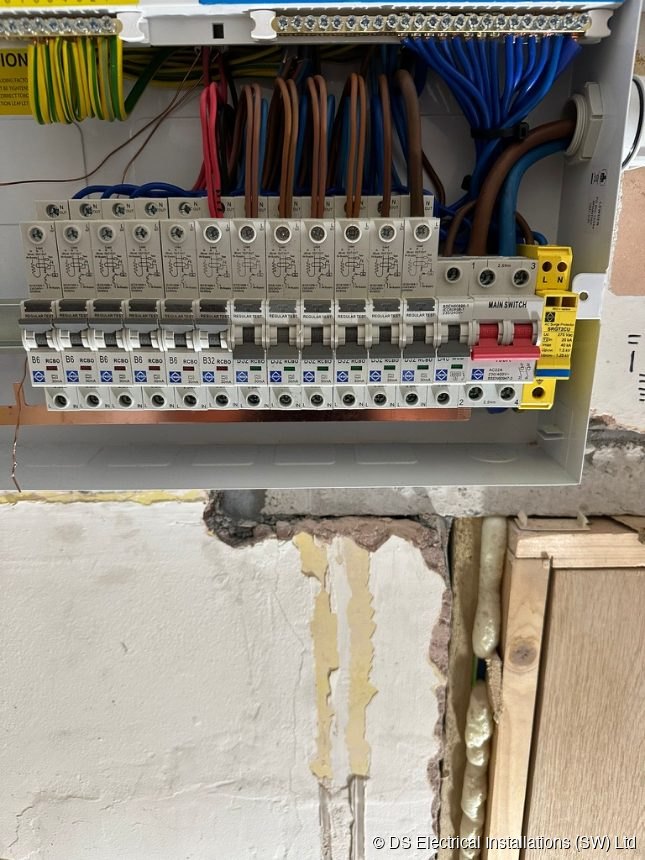
The Electrical Safety Standards in the Private Rented Sector and Social Rented Sector (England) Regulations 2020 then require the electrical installation to be inspected and tested at least every five years, with remedial work done within 28 days where the report calls for it. One five-year landlord EICR we carried out in town this year came back unsatisfactory for a single C2 (no RCD protection) plus four C3s.
Our single-let landlord pack covers the EICR, smoke and heat alarms, a CO alarm where one is needed and the certification in one visit. See landlord electrical compliance in Shepton Mallet and EICRs in Shepton Mallet for the inspection side.
Real jobs from 2026, in the town and the villages either side of it.
Mains alarm work is part of the fixed electrical installation, so it is installed and certified to BS 7671:2018+A4:2026. Depending on how the alarms are fed you receive either an Electrical Installation Certificate, where we install a new circuit, or a Minor Electrical Installation Works Certificate, where we extend an existing one. Where the work is notifiable we notify it under Part P through NAPIT.
You also get a written list of every alarm: where it is and its manufacture date. Alarms have a 10-year service life, and that list is how the replacement gets planned instead of forgotten.
To be clear about the limits: we certify the electrical work only. The paperwork covers the wiring and the alarms as part of the installation, not the fire safety of the building as a whole.
Everything on this page is about homes and residential lets. Shops around the Market Place, pubs, offices and the industrial units on the edges of town generally need a panel-based fire alarm with zones, call points and sounders, which is a different kind of system with its own design work. That is covered on our fire alarm page for Shepton Mallet. For the wider picture of our work in the town, see our Shepton Mallet page.
Leave your details and a line about the job. We will ring you back to talk it through and arrange a survey or a written price.
Go by floors and escape routes, not bedrooms. A two-bed terrace spread over three storeys needs a smoke alarm on each landing as well as the hall, so it often looks more like our three-bed layout than the two-bed flat one. Send us photos of each floor or let us walk round, and we will give you a fixed written price for the actual number of alarms.
Yes. Our single-let landlord pack covers the EICR, smoke and heat alarms, a carbon monoxide alarm where the property needs one and the certification in one visit. If the inspection turns up remedial work, you get a written quote for it and we re-test once it is done.
For a rented home, the alarm regulations exclude gas cookers, so a gas hob on its own does not trigger the requirement. A boiler, gas fire or wood burner does: the carbon monoxide alarm goes in the room that contains it. In a home you own, we still suggest one in any room with a fuel-burning appliance.
Sometimes, but check the date on the back first. Smoke and heat alarms have a 10-year service life, and some alarms chirp to signal the end of it. If yours are battery-only or past their date, replacing them with mains interlinked alarms with sealed back-up batteries is the sensible fix rather than another battery.
No. We certify the electrical work: an Electrical Installation Certificate for a new circuit, or a Minor Electrical Installation Works Certificate for an addition to an existing circuit, plus Part P notification where the work is notifiable. You also get a list of each alarm's position and manufacture date.
Priced by the job, not by the hour. A written, fixed price after a survey, NAPIT certification on every notifiable job.
07889 334849