If you own your home in Wells, nobody can make you upgrade your smoke alarms. The usual reason to do it anyway is realising that the alarm on the landing would not wake anyone in a back bedroom. We fit mains alarms that sound together, with sealed back-up batteries, in old stone houses and modern estates alike. Each home is quoted individually, at a fixed price in writing.
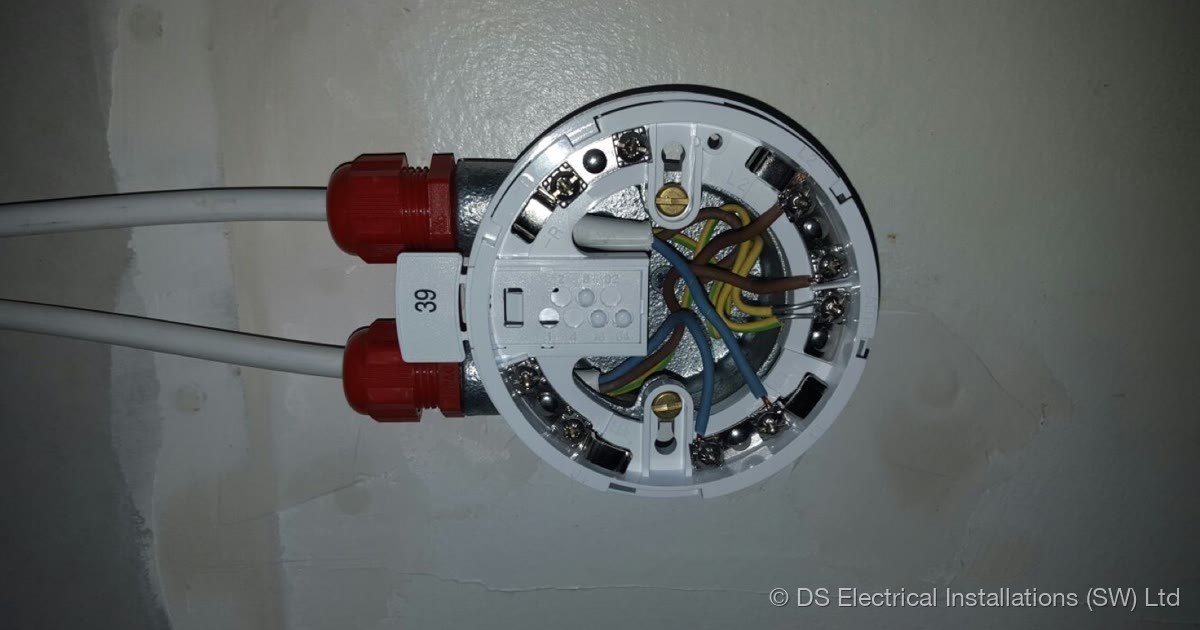
The landlord rules on alarms do not apply to a house you live in yourself, and there is no law telling an owner-occupier to replace working battery alarms. We would rather say that plainly than pretend otherwise.
The usual reasons to upgrade are practical:
Where building work is involved the picture changes. New homes and some extensions and loft conversions need mains alarms, and we design those to the plan your designer or building control has agreed.
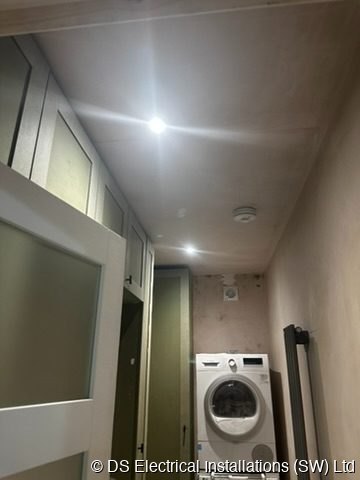
The centre of Wells has a lot of medieval and Georgian stone houses, and the edges of the city have Edwardian villas with tall ceilings and long hallways. Those houses share a problem: getting a cable from one ceiling to another without damage is slow, and sometimes it is simply not appropriate.
That is why we usually suggest Aico RadioLINK in these houses. Each alarm still runs from the mains, but the link between them is wireless, so we only need a supply at each alarm position, not a cable running between floors. No floorboards come up, and there are no long chases through old lime plaster.
A few things we do differently in older houses:
We don't publish a price list, because the cost depends on the house. Tall Georgian and Edwardian houses, extra storeys and listed interiors all change what is needed, as does a CO alarm or a designed system for a house in multiple occupation. We fix the price in writing after a look round or a set of photos.
Three kinds of detector make up a home system, and each has its own job.
These go on escape routes: the hall, every landing, and usually the main living room. They react to smoke from a smouldering fire before there is much heat.
The kitchen gets a heat alarm instead of a smoke alarm. Cooking fumes would set a smoke alarm off constantly, and an alarm that keeps going off ends up disconnected. A heat alarm ignores toast and reacts to a real rise in temperature.
Carbon monoxide has no smell, so the only warning is an alarm. One goes in each room with a fixed fuel-burning appliance: a boiler, a gas fire or a wood burner. Farmhouses on the Mendip fringe above Wells often have a stove in the main room, and that room needs one.
Where a kitchen also has a boiler, a combined heat and CO alarm covers both in one device. We fitted two of those in a cottage at Pilton this year, one in the kitchen and one in the living room.
Domestic layouts follow BS 5839-6 Grade D: mains-powered, sealed back-up battery, interlinked.
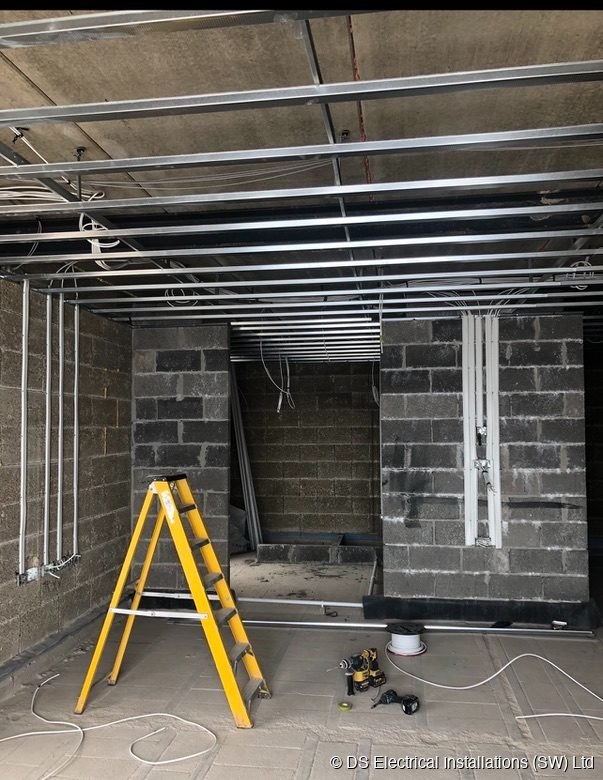
When the floors and ceilings are already open, a hardwired interlink is the natural choice. We run the interconnecting cable at first fix with the rest of the wiring, fit the alarm bases, and put the heads on at second fix once the dust has settled.
If you are planning a loft room in a Victorian terrace or an extension on a post-war house in Wells, bring us in early and we will build the alarm layout into the electrical design. If the work is a larger renovation, our rewires in Wells page explains how alarms are included in a rewire.
Jobs from this year in the city and nearby, described without names or addresses.
One of our Wells call-outs this year was to diagnose a fault on an alarm panel. Panels like that belong to a different kind of system, with zones, manual call points and sounders, designed for shops, offices, guest accommodation and other non-domestic buildings. Those systems are covered on our fire alarm page for Wells.
The alarms on this page are domestic: no panel, a detector on each ceiling, all linked together. When the work is done you receive an Electrical Installation Certificate if we installed a new circuit, or a Minor Electrical Installation Works Certificate if we extended an existing one, plus Part P notification where the work is notifiable. Those certificates cover the electrical work only. They are not a fire safety sign-off for the building.
If you rent out a house or flat, the alarm rules are not optional. Landlords need a smoke alarm on every storey with living accommodation and a carbon monoxide alarm in any room with a fixed combustion appliance other than a gas cooker. The full picture, including the five-yearly electrical inspection, is on our landlord compliance page for Wells. For more about our work across the city, see our Wells page.
Leave your details and a line about the job. We will ring you back to talk it through and arrange a survey or a written price.
With wireless interlink, each alarm needs only a fixing and a short supply, so the disturbance is small. We do not lift floorboards or chase between floors for a RadioLINK system. In a house with fragile lath and plaster ceilings, we agree positions with you first and fix to sound timber where we can.
Yes. Every alarm we fit has a sealed lithium back-up battery that keeps it working when the mains supply is off. The interlink keeps working too, so a fire downstairs during a power cut still sets off the alarms upstairs. The battery is sealed in for the life of the alarm, so there is no battery to change.
Smoke and heat alarms have a 10-year service life, and the manufacture date is printed on each one. When we fit a system, we give you a written list of every alarm's position and date, so you know when the replacement is due. If your current alarms have no date or are older than ten years, they are due now.
It is easier before the furniture arrives. An empty house also makes hardwired interlink a realistic option if you prefer it. You can combine it with an EICR so you know the condition of the wiring before you decide what else needs doing, and we can do both on one visit.
An Electrical Installation Certificate if we install a new circuit for the alarms, or a Minor Electrical Installation Works Certificate if we extend an existing circuit, plus Part P notification through NAPIT where the work is notifiable. These cover the electrical installation. We do not issue any document about the fire safety of the building.
Priced by the job, not by the hour. A written, fixed price after a survey, NAPIT certification on every notifiable job.
07889 334849