Stop and call
Warm or scorched sockets and plugs
What it can mean
A plug or socket that feels warm or hot, or has brown or black marks around it, usually means heat is building up. The cause can be a loose connection, a worn socket, a damaged plug, or too much plugged into one socket or extension lead. Electrical Safety First advises getting a registered electrician to check any socket that has burn marks or feels hot.
What is safe to check
- If the plug or socket is only warm, switch the socket off and unplug what is in it. If it is hot, scorched, melted or smells of burning, don't touch it: switch off at the main switch if it's safe to reach.
- Stop using that socket until it has been checked.
- Look at what was plugged in. Heaters, kettles and other high-power appliances sharing an extension lead can overload it, and one extension lead should never be plugged into another.
Stop and call
Scorch marks, melted plastic, a burning smell, or a socket that stays hot after unplugging: switch off at the main switch if it's safe to reach, and call us. 07889 334849
Read more: Fault finding and emergency repairs
Stop and call
A burning or hot-plastic smell
What it can mean
A smell of hot plastic or burning near a socket, switch, light fitting, appliance or the consumer unit is a danger sign. It can come from an overheating connection or a failing appliance, and the source needs finding before anything is switched back on.
What is safe to check
- If you can trace it to one appliance, switch it off and unplug it, if it's safe to do so.
- If it seems to come from a socket, switch, light fitting or the consumer unit, or you can't trace it, switch off at the main switch if it's safe to reach.
- Don't switch things back on to see whether the smell comes back.
Stop and call
Smoke, flames or sparks: get out, stay out and call 999. Never use water on an electrical fire. Once everyone is safe, call us to find the cause. 07889 334849
Read more: Emergency call-outs
Stop and call
Buzzing or crackling from a socket, switch or the board
What it can mean
Buzzing, crackling or fizzing from a socket, switch, light fitting or the consumer unit can be arcing: electricity jumping across a loose or damaged connection. Electrical Safety First lists arcing sounds as a reason to have your electrics checked by a registered electrician.
What is safe to check
- Stop using the socket, switch or light the noise is coming from.
- If it's a socket, switch it off and unplug what is in it, if it's safe to do so.
- Look, don't touch. Note any discolouration or marks so you can tell us about them.
Stop and call
If the noise comes from the consumer unit, or there is a smell, heat or scorch marks, switch off at the main switch if it's safe and call us. 07889 334849
Read more: Signs your fuse board needs replacing
Safe to check first
A breaker or RCD that trips or won't reset
What it can mean
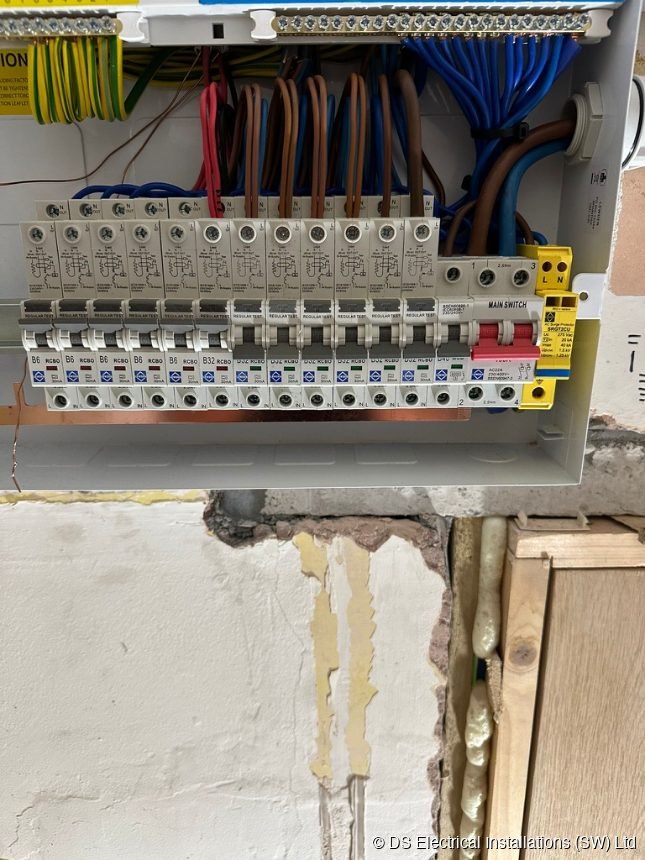
A circuit breaker or RCD switching off is a safety device doing its job. If it keeps tripping, Electrical Safety First says there is likely to be a fault to investigate, either in a particular appliance or in the wiring itself. A switch that won't stay up at all usually means the fault is still there.
What is safe to check
- Switch off or unplug everything on the affected circuit.
- Reset the breaker or RCD once.
- Plug things back in one at a time. If it trips when one appliance goes back on, leave that appliance unplugged and get it checked.
- Never tape, wedge or hold a switch in the on position.
Stop and call
If it trips again with nothing plugged in, won't reset, or trips with a bang, a smell or a scorch mark, leave it off and call us. 07889 334849
Read more: Why your RCD keeps tripping · Fuse board upgrades
Safe to check first
Sockets or lights dead in part of the house
What it can mean
When one room's sockets or one floor's lights stop working, the usual cause is a breaker or RCD that has switched off. If nothing at the board has tripped, the fault can be a loose connection or a failed socket or switch on that circuit, and it needs testing to find.
What is safe to check
- Look at the consumer unit. Is any switch down, or sitting in the middle position?
- If so, unplug things on that circuit and reset it once, as in the tripping advice.
- If you have an older board with fuses, don't change or rewire a fuse yourself. Call us.
- Don't run extension leads from other rooms as a long-term fix.
Stop and call
Nothing has tripped and there is still no power, or a socket on the dead circuit is warm or marked: call us. 07889 334849
Read more: Fault finding
Safe to check first
No power in the whole house, or several rooms at once
What it can mean
If everything has gone off, it may be a power cut in your area rather than a fault in your home. The Energy Networks Association's advice is to check whether your neighbours have power: if they do, your trip switch may have activated. Several rooms off at once with nothing tripped, or lights behaving strangely, needs checking by an electrician.
What is safe to check
- Check whether your neighbours have power, or whether the street lights are on.
- If they're off too, report it on your local network operator's website or call 105, the free power cut number for England, Scotland and Wales.
- If only your home is off, check the main switch and the trip switches at your consumer unit.
- Switch off appliances that shouldn't be left unattended, and leave one light on so you know when the power is back.
Stop and call
A damaged power line or equipment outside: keep well away, keep other people away and call 105. If there is a risk to life, call 999. If only your home is off and nothing has tripped, call us. 07889 334849
Read more: Emergency call-outs
Safe to check first
Flickering or dimming lights
What it can mean
One flickering light is often the lamp itself, a lamp that isn't seated properly, or an LED lamp on a dimmer that doesn't suit it. Flicker across a whole room or several rooms, or flicker with buzzing or warmth at a switch or fitting, can point to a loose connection and needs testing.
What is safe to check
- Switch off, let the lamp cool, then check it is seated properly or try a new one.
- If it's on a dimmer, turn it up to full. If the flicker stops, the dimmer and the lamp may not be compatible.
- Notice whether it's one light, one room or the whole house. That helps us find the cause faster.
Stop and call
Flicker with buzzing, a burning smell, or discolouration or scorch marks on a fitting: stop using it and call us. Electrical Safety First lists scorch marks and discolouration on light fittings as warning signs. 07889 334849
Read more: LED downlights and dimmers · Fault finding
Safe to check first
Lights dim when an appliance switches on
What it can mean
A slight, brief dip when something powerful starts, such as an electric shower, a heater or a washing machine, can happen. A deep or lasting dim, lights flickering for a while afterwards, or a dip that gets worse over time, can point to a loose connection or an overloaded circuit, and should be tested.
What is safe to check
- Note which appliance sets it off and which lights dim.
- Check whether it happens in one room or across the house.
- Ask your neighbours whether their lights dip too. If the whole street is affected, it may be a supply issue for your network operator: enter your postcode at PowerCut105.com to find them.
Stop and call
Dimming together with buzzing, a smell, or a warm socket or switch: stop using that appliance and call us. 07889 334849
Read more: Fuse board and consumer unit upgrades