
Your fuse board, officially called a consumer unit, is the most important safety device in your home. It controls every circuit: lights, sockets, cooker, shower. When it fails to do its job, the consequences can range from a nuisance power cut to a house fire.
The good news is that a failing fuse board usually gives you warning. Here are the five signs that mean it is time to act.
Sign 1: You Have Rewireable Fuses (Wire-in-Cartridge)
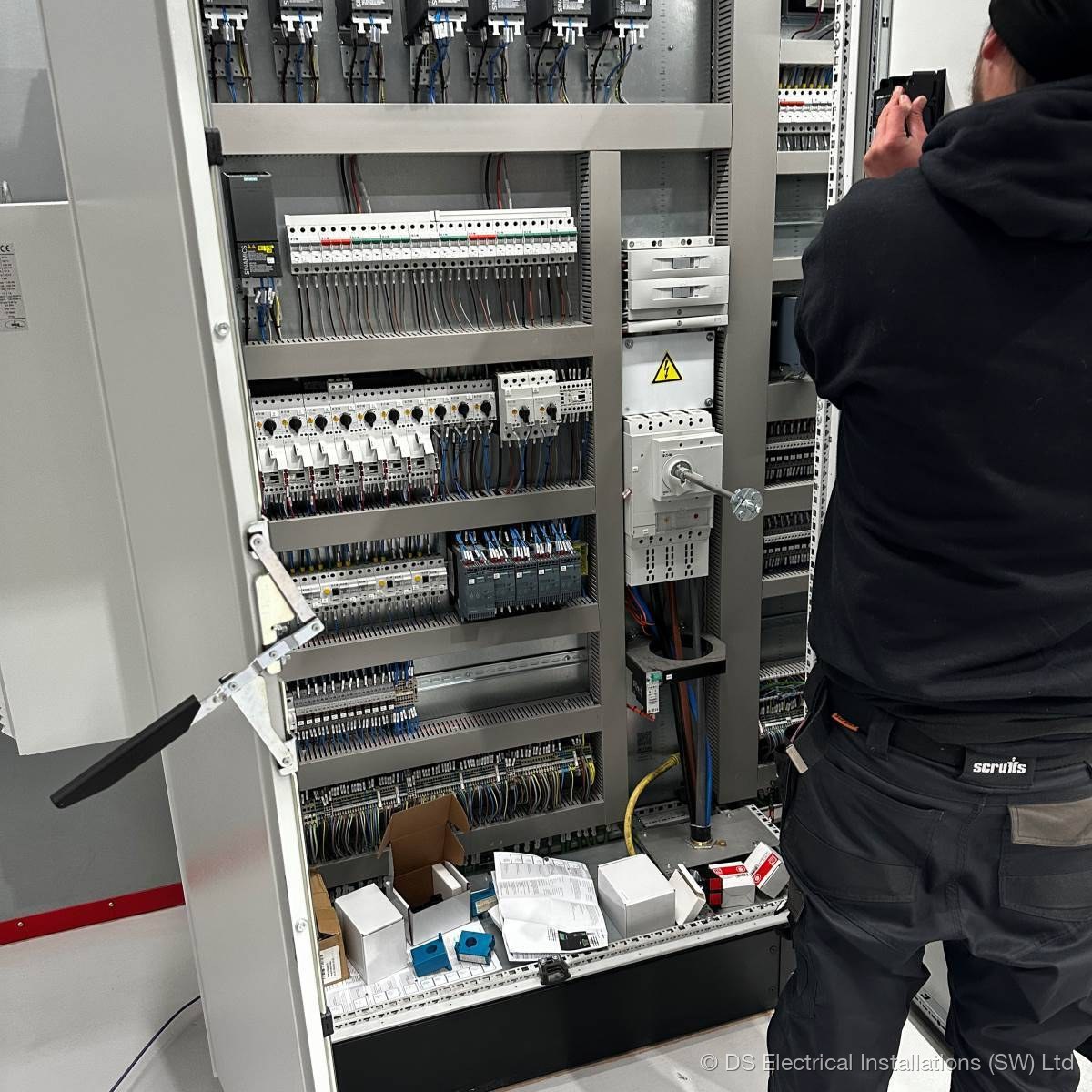
Open your fuse box and take a look. Do you see a row of ceramic or porcelain holders with a piece of thin wire strung across them? Those are rewireable fuses, and they have not been installed in new homes since the late 1990s.
The problem is not just that they are old, it is what they cannot do. Rewireable fuse boards have no RCD (Residual Current Device) protection. An RCD detects a fault to earth in milliseconds and cuts the power before it can cause a fatal electric shock. Without one, if you accidentally drill through a live cable or a faulty appliance develops an earth fault, there is nothing standing between you and a potentially lethal current.
Fire Risk: Pre-2016 Plastic Boards
Many homes from the 1990s and early 2000s have a plastic consumer unit, a step up from rewireable fuses but still a concern. Since January 2016, Amendment 3 to the 17th Edition (BS 7671:2008) has required all new domestic consumer units to be made from non-combustible material (typically steel). A plastic enclosure can melt and ignite during a fault, turning a tripped breaker into a fire. If your board is plastic, it is worth getting it assessed.
Sign 2: Your Board Has No Main Switch
Stand in front of your fuse board. Is there a large switch at the top that you could throw to cut all power to the house? If not, if you see nothing but a row of fuses with no master switch, your board is very old indeed, likely pre-1970s.
Boards without a main switch are a serious fire risk and will immediately fail an Electrical Installation Condition Report (EICR) with a C1 code: danger present. If you are buying or selling a property in Wells, Bath, or Shepton Mallet and a surveyor opens the cupboard to find no main switch, expect the sale to stall until it is remedied.
A board without a main switch is not borderline, it needs replacing. Call us.
Sign 3: Your RCDs Keep Tripping
You reset the RCD, everything comes back on, then it trips again a day later. It is tempting to keep resetting it and hope the problem goes away. Please do not.
An RCD trips because it has detected current leaking to earth somewhere on that circuit. That leakage could be caused by a faulty appliance, easily fixed, or it could mean a more serious problem: degraded cable insulation, moisture ingress, a wiring fault behind a wall. Every trip is the RCD doing its job and telling you something is wrong.
If the RCD trips repeatedly even with all appliances unplugged, the problem is in the fixed wiring. At that point you need a qualified electrician to carry out insulation resistance testing with a Megger instrument to locate the fault.
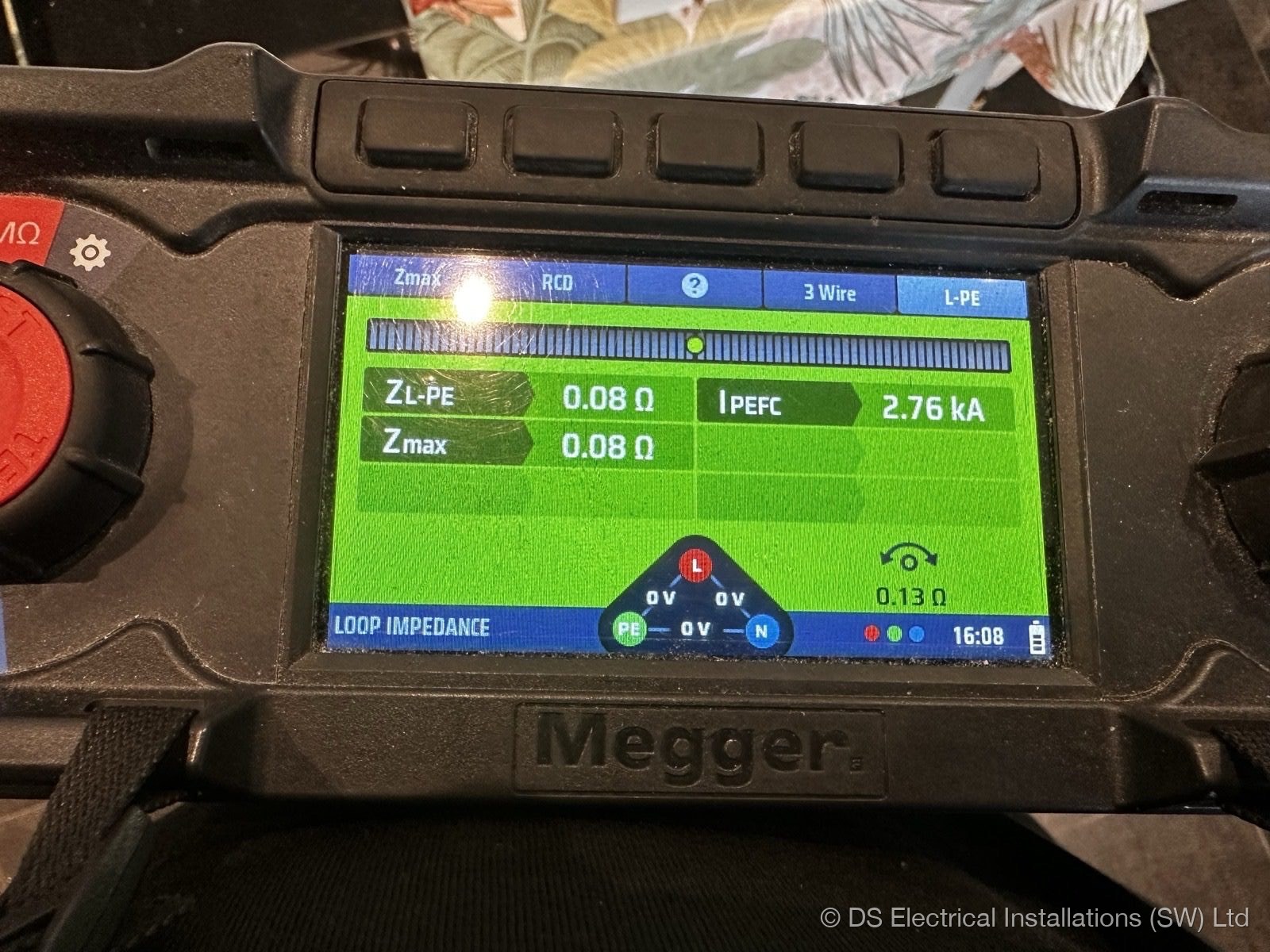
Repeated tripping on an older board can also simply mean the consumer unit has reached the end of its life. Older RCDs become increasingly sensitive with age and will trip at lower fault levels than they were designed to, replacing the board solves the problem cleanly.
Not sure if your board needs replacing?
We offer a fuse board check, with the cost credited in full against the upgrade if you go ahead.
Sign 4: Breakers Feel Warm, Are Buzzing, or Look Discoloured
If you can safely get close to your fuse board, hold your hand near (not touching) the breakers. Do any feel warm? Can you hear a faint buzzing or humming? Do any of the breakers look yellowed, brown, or scorched?
Any of these signs points to a loose connection or an overloaded circuit. A loose connection at a breaker creates resistance, and resistance creates heat. Heat degrades insulation, which creates more resistance, which creates more heat, a classic runaway scenario that ends in a fire.
A buzzing sound from a breaker usually indicates the same thing: a loose termination causing arcing. Discolouration is physical evidence that heat has already been building up, possibly for months. Do not wait for this one.
Why This Matters for Insurance and House Sales
Check your insurance policy for any conditions about the electrics, especially at renewal. Surveyors acting for mortgage lenders in areas like Frome, Midsomer Norton, and Castle Cary routinely flag outdated or damaged consumer units as a condition of sale. Upgrading the board protects a six-figure asset.
Sign 5: You Can Smell Burning, Act Today
Do not wait. Call today.
If you can smell burning plastic or a hot, acrid smell coming from near your fuse board, consumer unit, or any electrical socket, call us immediately on 07889 334849 or. This is not a wait-and-see situation. A burning smell from electrical equipment means active arcing or insulation failure. If you are not certain of the source, consider switching off at the main switch and calling us or the emergency line before the smell gets worse.
A burning smell from a consumer unit almost always means one of two things: a breaker has failed internally, or a connection at the bus bar has worked loose and is arcing. Either way, the board needs to come out today, not in a week when someone can fit you in, today.
We cover emergency callouts across Mid Somerset and surrounding areas, including Bruton, Street, Wedmore, and surrounding villages. If you smell burning from electrical equipment, please call us or your Distribution Network Operator (National Grid Electricity Distribution, formerly Western Power; power-cut and emergency number 105) to isolate the supply at the meter if needed.
What Does a New Fuse Board Cost in 2026?
No two boards are the same job, so we price each one individually. The price depends on the size of the property, the number of circuits, the condition of the existing wiring and whether earthing or bonding work is needed. We confirm a fixed price in writing before any work starts.
| Type of Upgrade | Best For |
|---|---|
| Full RCBO Board | Maximum per-circuit protection |
| Upgrade with earth/bonding work | Older properties needing bonding update |
Every quote includes supply and fit of a new metal consumer unit, full testing to BS 7671:2018, an Electrical Installation Certificate (EIC), and NAPIT registration, so the work is automatically notified to Building Control. The cost of our fuse board check is credited against the upgrade if you proceed, so you are not paying twice.
What Does BS 7671:2018 (18th Edition) Actually Require?
BS 7671 is the UK wiring regulations, the legal standard all electrical work must comply with. The current version is the 18th Edition (2018), and it requires:
- Non-combustible consumer unit enclosure, steel or equivalent. Plastic boards fail this.
- RCD protection for most circuits, including all socket outlets used outdoors or in bathrooms, and any circuits in high-risk locations.
- AFDD (Arc Fault Detection Device) provision, becoming increasingly common in new installations to detect dangerous arcing before it causes a fire.
- Correct earth electrode and bonding, main protective bonding to gas, water, and structural steel must be present and correctly sized.
A consumer unit upgrade is a notifiable job under Part P of the Building Regulations. This is a good thing: it must either be done by an installer registered with a competent person scheme (who self-certifies), checked by a registered third-party certifier, or notified to building control before work starts. A registered installer self-certifies and registers the job with Building Control, giving you a paper trail that is invaluable when selling your home.
Read our customers' experiences on the testimonials page, the majority of our fuse board upgrades are in older Somerset homes where the existing board has been in place for 20 or 30 years.
What Happens on the Day?
A straightforward consumer unit upgrade takes around 4-6 hours. Power to your property will be off during the installation. Here is what to expect:
- Assessment, we inspect the existing board, count circuits, check earthing and bonding, note any remedial work needed.
- Removal, the old unit is disconnected and removed. If it is a particularly old board, we will photograph it for our records.
- Installation, the new metal consumer unit is fitted, circuits are landed, and all connections are made.
- Testing, every circuit is tested: insulation resistance, earth fault loop impedance, RCD trip time, polarity. Nothing is left unchecked.
- Certification, you receive your EIC before we leave. We register the work with NAPIT and Building Control. Done.
Common questions
What are the warning signs that a fuse board needs replacing?
Replace your consumer unit if: it still uses rewireable fuses (ceramic fuse carriers with wire, pre-1970s); it has no RCD protection (pre-2008 boards); it trips repeatedly under normal load; it has a plastic enclosure (new domestic consumer units have had to be non-combustible since 2016; an existing plastic unit is not automatically non-compliant); or if you are adding significant new load (EV charger, hot tub) that the board cannot safely accommodate.
How much does a fuse board replacement cost in 2026?
The price depends on the size of the property, the number of circuits and whether any remedial cable or earthing work is needed. Every quote includes a modern full-RCBO metal-clad board, all connections, testing, and Part P Building Regulations notification, and we confirm a fixed price in writing before we start.
How long does a fuse board replacement take?
A typical consumer unit swap takes 4–6 hours for a standard 3–4 bed house. Power is off throughout. We complete testing and reinstatement the same day. The electrical completion certificate is issued before we leave.
Do I need AFDDs on my new consumer unit?
BS 7671 requires Arc Fault Detection Devices (AFDDs) on socket circuits up to 32 A in HMOs, care homes, purpose-built student accommodation and certain tall (higher-risk) residential buildings, and recommends them in ordinary homes. They are not yet mandatory for all domestic rewires but are best practice, particularly in houses with older wiring. We advise on whether AFDDs are appropriate for your property.