Tripped circuits, burning smells, sparking sockets, dead boards, diagnosed and fixed by a NAPIT-approved electrician across Mid Somerset.
If any of these happen, stop what you're doing and call us immediately. We respond to emergency callouts across Mid Somerset -- typically on site within the hour for critical situations.
No electricity in part or all of your property. Could be a tripped main switch, faulty RCD, failed MCB, a supply-side issue from your DNO, or an internal fault such as a short circuit or earth fault on one of your circuits. We carry Megger multifunction testers to diagnose the root cause rapidly -- whether it is a supply failure, a faulty protective device, or a wiring defect.
A burning smell near sockets, switches, or your consumer unit is a sign of overheating -- typically caused by loose terminal connections, overloaded circuits, or a failing component such as an MCB or busbar. Left unchecked, this can lead to electrical fire. We use thermal imaging cameras to pinpoint hot spots inside distribution boards and behind walls without invasive investigation.
Visible sparks when plugging in or operating a switch. This is usually caused by loose connections, damaged wiring, or arcing at the terminal. Arcing is a leading cause of electrical fires in UK properties. We will isolate the circuit, strip down the accessory, identify the fault, and either repair or replace the damaged component. All work completed to BS 7671.
Your RCD or MCB keeps tripping and will not stay on. This indicates a live fault on the circuit -- typically an earth fault (insulation breakdown), a short circuit, or a faulty appliance pulling the RCD. We use insulation resistance testing at 500V DC and earth fault loop impedance measurement to isolate the faulty circuit and identify the exact point of failure.
Visible bare wires from DIY work, building damage, rodent damage, or deteriorating old rubber/lead-sheathed cabling. Exposed live conductors present an immediate risk of electric shock and electrocution. We carry a full range of cable, connectors, and enclosures to make emergency repairs safe and permanent -- not just taped up.
Received a shock from a light switch, socket, appliance, or metal pipework. This indicates a serious earthing fault -- either a broken earth conductor, missing supplementary bonding, or a fault in the main earthing terminal (MET). Under BS 7671, all exposed and extraneous conductive parts must be connected to the main earthing system. We test earth continuity and bonding resistance to identify and fix the defect.
Not every electrical problem is an emergency. Here is how to tell the difference -- and knowing this could save you a callout fee.
These situations require immediate professional attention:
These are important but not immediately dangerous. Call us to book a convenient appointment:
If you are in any doubt, call. We would rather talk you through it on the phone and confirm it is safe than have you guessing. Electrical faults can escalate quickly -- a minor trip today can become a fire overnight. There is no charge for a phone conversation, and we will always give you honest advice on whether it needs an emergency visit or can wait for a standard appointment.
A power failure in a commercial premises is not just an inconvenience -- it is lost revenue, spoiled stock, security vulnerabilities, and potential breach of your duty of care under the Electricity at Work Regulations 1989 and the Regulatory Reform (Fire Safety) Order 2005.
Loss of power to server rooms, comms cabinets, or network infrastructure can bring an entire business to a standstill. We diagnose the supply fault, restore power, and verify that UPS systems and backup supplies are functioning correctly. We also check dedicated circuits for correct earth fault loop impedance and RCD discrimination to prevent nuisance tripping.
Commercial kitchens, refrigeration, EPOS systems, and display lighting all rely on a stable electrical supply. A tripped RCD on a commercial three-phase board can knock out an entire bank of circuits. We carry temporary distribution equipment and can provide short-term power solutions to keep your business trading while permanent repairs are made. We understand food safety regulations and the urgency of restoring refrigeration.
In multi-tenant office buildings, a single earth fault can affect multiple floors if RCD discrimination is not correctly configured. We use systematic fault-finding techniques -- insulation resistance testing, earth fault loop impedance measurement, and thermal imaging -- to isolate the faulty circuit without disrupting other tenants. We also review the distribution board discrimination settings to prevent recurrence.
Under the Regulatory Reform (Fire Safety) Order 2005, the responsible person must ensure fire detection and emergency lighting systems are maintained in working order. A fault in your fire alarm supply circuit (BS 5839-1) or emergency lighting system (BS 5266-1) is not just an electrical fault -- it is a life safety issue and a legal compliance breach. We restore supply to these critical systems as a priority and carry out functional testing to confirm the system is fully operational before we leave.
Three-phase supply failures, high-bay lighting circuits, machinery supply faults, and external lighting failures on industrial premises. We are experienced with three-phase distribution, TN-C-S and TN-S earthing systems, and the larger cable sizes and protective device ratings found in industrial installations. We carry a comprehensive range of MCBs, RCDs, contactors, and cable to make permanent repairs on the first visit wherever possible.
When permanent repairs require extended downtime -- replacement distribution boards, major cable replacement, or waiting for DNO supply restoration -- we can provide temporary power distribution to maintain essential services. We carry portable distribution boards, extension leads rated for commercial use, and the connectors and cable to set up safe, temporary supplies to critical equipment. All temporary installations comply with BS 7671 and are properly protected.
From your first phone call to a safe, working installation -- here is exactly what happens when you call DS Electrical for an emergency.
You call 07889 334849 (Dan Stevens) or (office). We ask a few questions to understand the situation: What happened? Is there a burning smell or smoke? Has anyone been injured? Can you see your consumer unit? This helps us assess the severity, advise you on immediate safety steps, and make sure we bring the right equipment.
For genuine emergencies, we aim to be on site as quickly as possible. Our vans are fully stocked at all times with Megger multifunction testers, thermal imaging cameras, cable tracers, a comprehensive range of MCBs, RCDs, RCBOs, cable, connectors, consumer units, and accessories. We do not need to stop at a wholesaler -- we come prepared to diagnose and fix on the first visit.
On arrival, we carry out a systematic fault-finding process. Visual inspection first, then instrument testing -- insulation resistance, earth fault loop impedance, continuity, RCD trip times. We use thermal imaging to identify hot spots that are not visible. We trace circuits using signal generators and cable tracers where needed. We identify the root cause, not just the symptom.
We carry out the repair, replace any damaged components, and re-test the affected circuits to confirm the installation is safe. You receive full certification for any work carried out -- Minor Works certificates for smaller repairs, or an Electrical Installation Certificate (EIC) for larger alterations. All work complies with BS 7671:2018+A4:2026 and is registered through our NAPIT membership where notifiable.
Our vans are stocked as mobile workshops. We arrive ready to diagnose, repair, and certify -- not just look at the problem and come back another day.
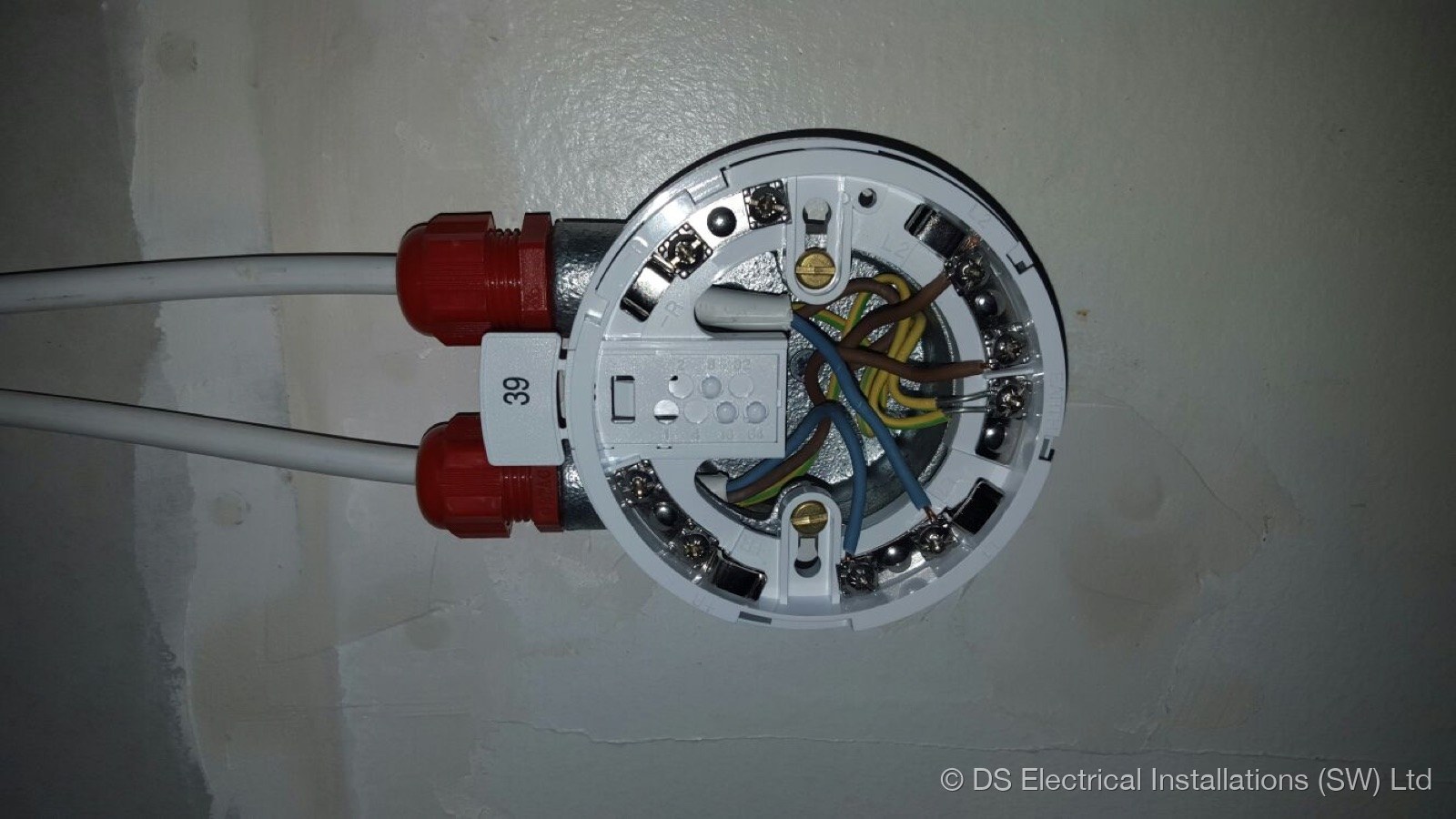
From fire alarm panels to emergency lighting -- we inspect, test, and certify life safety systems across Mid Somerset and surrounding areas.
The best emergency is the one that never occurs. Regular inspection and maintenance is the most effective way to prevent electrical emergencies in both domestic and commercial properties.
A regular Electrical Installation Condition Report identifies deterioration, damage, and non-compliance before they become dangerous. NICEIC and Electrical Safety First recommend an EICR every 10 years for owner-occupied homes; rented homes need one at least every 5 years by law, and NICEIC recommends at least every 5 years for businesses. Most of the emergencies we attend could have been caught and prevented by a routine EICR. Learn more about our EICR service.
Older consumer units with rewirable fuses or MCBs without RCD protection are a significant fire and shock risk. Modern consumer units with RCBOs provide individual circuit protection -- a fault on one circuit does not affect the rest of the property. If your fuse box is more than 15 years old, it is worth having it assessed.
We use thermal imaging cameras to detect overheating connections, overloaded circuits, and loose terminals inside distribution boards -- problems that are invisible to the naked eye but can cause fires. This is particularly valuable in commercial premises where distribution boards are heavily loaded and operate continuously.
Under BS 5839-1 (fire detection) and BS 5266-1 (emergency lighting), these life safety systems require regular inspection and testing. Fire alarms need a weekly user test and servicing by a competent person at least every six months. Emergency lighting requires monthly functional tests and annual full-duration discharge tests. We provide planned maintenance contracts for both.
Fast response emergency callouts across Mid Somerset and surrounding areas.
Further Reading
Consumer Units
Consumer Unit Upgrade Guide 2026
When to upgrade your fuse board and what’s involved in the process.
EICR Guide
EICR Explained: What Is an Electrical Installation Condition Report?
Understand what an EICR tests, how long it takes, and what happens after.
Fault Finding Guide
RCD Keeps Tripping, What to Do
How to fault-find a nuisance RCD trip, and when to stop guessing and call an electrician.
Emergency Lighting Guide
BS 5266 Emergency Lighting Explained
Maintained vs non-maintained fittings, testing schedules, escape routes and costs in Somerset.
NAPIT approved. Fully insured. Fast response across Mid Somerset.
Direct Dan Stevens, Director: 07889 334849