
If you rent out residential property in Somerset, whether that is a single-bedroom flat in Frome, a house share in Bath, or a licensed HMO in Shepton Mallet, you have a legal duty to protect your tenants from fire. The standard that governs fire detection and alarm systems in buildings is BS 5839, and the grade of system your property requires depends directly on the type of tenancy and number of occupants.
Understanding this is not just about passing an inspection. A non-compliant fire alarm system can complicate an insurance claim and expose you to significant financial and legal liability if something goes wrong. This guide explains which grade applies to which type of property, what each system involves, and what we provide as part of our fire alarm installation service.
BS 5839: The Two Parts That Matter to Landlords
BS 5839 is the British Standard for fire detection and alarm systems. It has several parts, but landlords and letting agents need to know about two in particular:
- BS 5839 Part 6, covers fire detection and alarm systems in domestic premises (houses, flats, HMOs, and similar). This is the part most residential landlords are governed by.
- BS 5839 Part 1, covers fire detection and alarm systems in non-domestic premises (commercial buildings, offices, mixed-use developments). If you rent out commercial property or operate a larger licensed premises, Part 1 applies.
Under Part 6, systems are categorised by Grade (how the detectors are powered and connected) and Category (how much of the building is covered). The most common designations you will see on reports and specifications are Grade D and Grade A.
Which Grade Does My Property Need?
| Property Type | Typical Grade | What That Means |
|---|---|---|
| Single-dwelling rental (1 household) | Grade D, LD3 | Mains-powered with battery backup, interlinked; smoke alarms in the escape-route circulation areas (we also recommend a heat alarm in the kitchen) |
| Small HMO (3-4 occupants) | Grade D, LD3 + kitchen and lounge | As above, plus detection in the kitchen, the lounge and any risk cellar (shared houses up to four storeys) |
| Taller or bedsit-type HMO (LACORS benchmark) | Grade A | Hardwired system with dedicated control panel, manual call points, and sounders |
| Commercial / mixed-use premises | BS 5839 Part 1 system | Fully addressable or conventional panel with zone mapping and monitoring |
Single-Dwelling Rentals: Grade D, LD3
If you rent out a self-contained house or flat to a single household, the LACORS fire-safety benchmark that councils use is an interlinked Grade D, LD3 system. In practical terms, this means:
- Mains-powered smoke alarms with a battery backup (so they continue to work in a power cut)
- Interlinked, when one alarm triggers, every alarm in the property sounds
- Smoke alarms in every circulation area (hallways, landings) on each floor
- We also recommend a heat alarm in the kitchen (heat rather than smoke, to avoid cooking false alarms)
The legal minimum for landlords is set by the Smoke and Carbon Monoxide Alarm Regulations 2015 (amended 2022): a working smoke alarm on every storey with living accommodation, and a carbon monoxide alarm in any room with a fixed combustion appliance (such as a gas boiler; gas cookers are excluded). The law does not specify mains or battery alarms. Alarms must be checked on the day each new tenancy starts.
Small HMOs: Grade D, LD3 plus risk rooms
For a shared-house HMO of up to four storeys (occupants who are not a single household, sharing facilities), the LACORS benchmark is an interlinked Grade D system covering the escape route (LD3), plus detection in the kitchen, the lounge and any risk cellar. LACORS does not normally recommend bedroom detection in a normal-risk shared house; bedsit-type HMOs, where people cook in their rooms, need more.
Your local council's housing team may impose stricter requirements than the BS 5839 minimum. It is always worth obtaining the specific schedule from the council before specifying a system.
Not sure what your HMO needs?
We carry out compliance assessments for landlords across Wells, Bath, Frome, and Shepton Mallet. We will tell you exactly what the council will expect before any work starts.
Taller and Bedsit-Type HMOs: Grade A
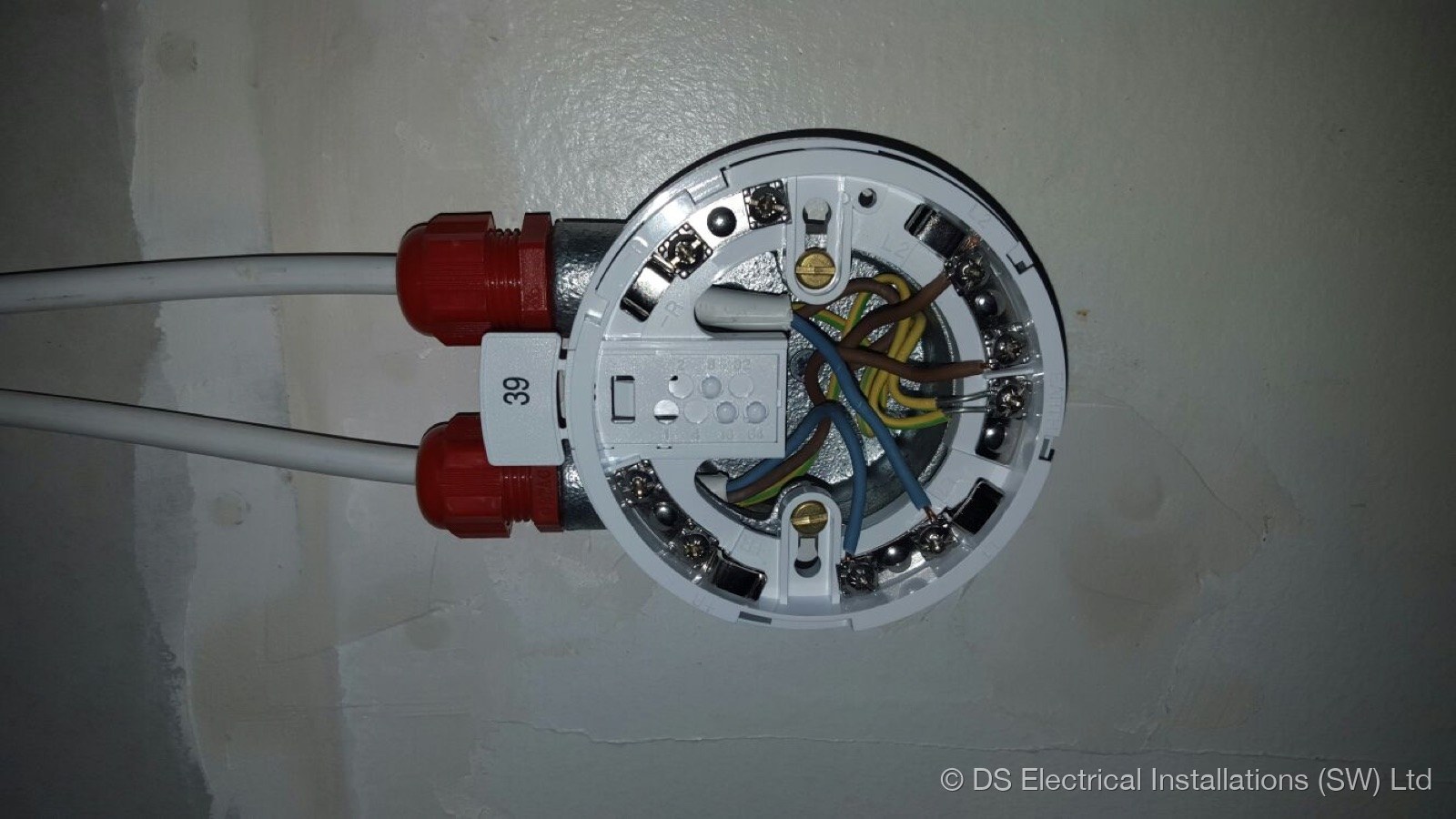
Fire detection in HMOs is set by risk assessment. LACORS benchmarks, which Somerset Council follows, range from an interlinked Grade D system (most shared houses up to four storeys) to a Grade A system for taller or bedsit-type HMOs. Your licence schedule is what counts. Grade A is a step change from Grade D. Where Grade D uses standalone mains-powered detectors, Grade A is a fully interconnected, hardwired system comprising:
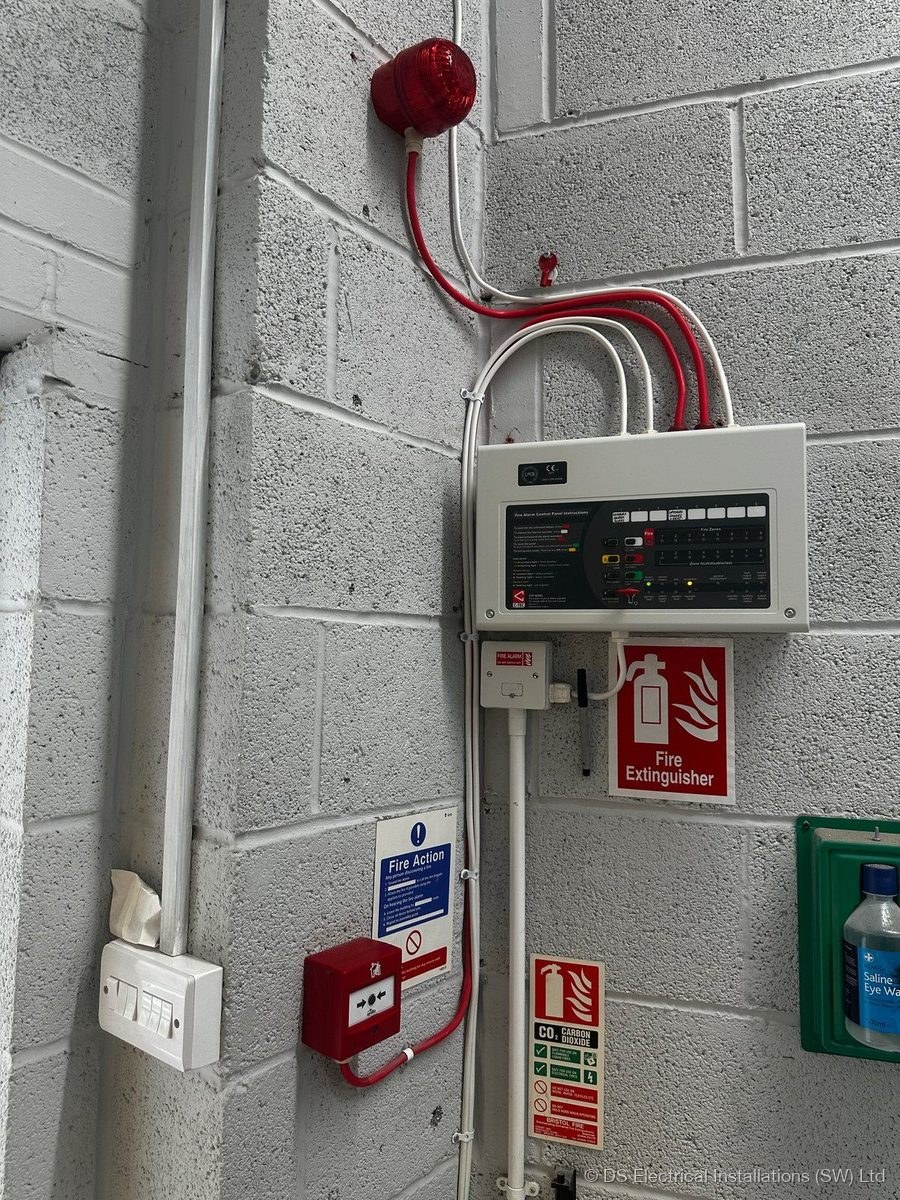
- A dedicated fire alarm control panel, typically located near the main entrance
- Addressable or conventional detectors wired back to the panel
- Manual call points (break-glass units) at each exit route
- Audible sounders throughout, sufficient to wake sleeping occupants
- A logbook and routine test schedule
LACORS guidance expects Grade A systems to be serviced every six months by a competent person, with a certificate, and recommends an annual detector test with a certificate for Grade D systems. We offer service contracts that cover this, so you have a fixed annual cost and we handle the scheduling.
Commercial Premises: BS 5839 Part 1
If you own a commercial property, offices, retail units, workshops, or mixed-use buildings, BS 5839 Part 1 applies. This typically means a fully addressable or conventional panel system with zone mapping, enabling the first responders to identify precisely where in the building a detector has activated. Commercial systems are usually connected to an Alarm Receiving Centre (ARC) for remote monitoring, so a response can be initiated even if the building is unoccupied.
Part 1 systems require formal commissioning documentation, an O&M (operation and maintenance) manual, a weekly user test, and servicing by a competent person at least every six months. Our maintenance packages cover both domestic Grade A systems and commercial Part 1 installations.
The Risks of Non-Compliance
What Landlords Risk Without a Compliant System
Non-compliance with fire alarm requirements is not a minor administrative issue. The consequences can include:
- Insurance questions, check your policy's fire-safety conditions now, not after a claim
- Financial penalties up to £40,000 per breach under the Housing Act 2004
- Personal injury or unlawful death claims, if a tenant is harmed in a fire that a compliant system would have detected earlier
It is worth noting that these risks do not disappear once a system is installed. If your alarm system has not been tested and serviced as recommended, or if a detector has been removed or painted over, the system may be deemed non-functional at the point of an incident, with the same consequences as if it were never installed.
Annual Testing and Service Contracts
Fire alarm systems need regular testing. For Grade D systems, LACORS guidance says test monthly with the test button and recommends an annual detector test by a competent person, with a certificate. For Grade A panel systems in HMOs and commercial premises, the guidance is a weekly user test and a six-monthly service by a competent person with a signed certificate, and councils are increasingly asking to see this documentation at licence renewal.
We offer annual service contracts for both HMO landlords and commercial clients. This covers:
- Full functional test of all detectors, sounders, and manual call points
- Battery and power supply checks
- Panel fault and event log review
- Cleaning of optical detectors (which can drift over time with dust accumulation)
- Issue of a signed service certificate for your compliance records
An annual service contract means you do not have to remember to book it, we contact you when it is due. Read what our landlord clients across Mid Somerset and surrounding areas say on the testimonials page.
What We Include: Design, Supply, Install, Certify
We handle the full process from initial compliance assessment to handover:
- Site survey and system design, we assess the property, identify which grade and category applies, and produce a layout drawing showing detector positions, panel location, cable routes, and sounder positions.
- Supply of equipment, we specify and supply all hardware, using recognised brands that meet EN 54 (the product standard for fire detection components).
- Installation, cables are run neatly, minimising disruption to décor. In occupied properties, we can phase work to minimise tenant inconvenience.
- Commissioning and testing, every device is individually tested to confirm it is operating correctly and communicating with the panel (for Grade A systems).
- Certification, you receive a BS 5839 installation certificate that you can present to your council, insurer, or managing agent.
If you also need a landlord electrical safety certificate (EICR), we can carry out both at the same visit, saving you time and a second call-out fee.
For larger portfolios, our maintenance packages bundle EICR, fire alarm servicing, and emergency lighting checks into a single annual visit with one invoice, keeping your compliance records simple and your costs predictable.
Common questions
What fire alarm standard applies to rented properties in England?
BS 5839-6 specifies fire detection and alarm systems for dwellings. For rented properties, the law (Smoke and Carbon Monoxide Alarm Regulations 2015, amended 2022) requires a working smoke alarm on every storey with living accommodation and a CO alarm in any room with a fixed combustion appliance except a gas cooker (such as a gas boiler or log burner). The law does not specify mains or battery alarms; government guidance recommends alarms that comply with BS 5839-6. We recommend and fit mains-powered interlinked Grade D1.
Do smoke alarms in rented properties need to be interlinked?
The law does not require interlinking, but we strongly recommend it: with interlinked alarms, when one alarm triggers, all alarms in the property sound simultaneously. This is critical in multi-floor properties where a fire on the ground floor may not be heard from bedrooms. Mains-powered interlinked alarms (Grade D1) are what we fit in rental properties.
How often do fire alarms in rented properties need testing?
Landlords must check alarms are working on the day each new tenancy starts. Alarms should then be tested monthly using the test button, and LACORS recommends an annual detector test by a competent person, with a logged certificate. We provide annual service visits with written certification.
What is the penalty for not having working smoke alarms in a rental property?
Local authorities can issue Remedial Notices requiring installation within 28 days. If a landlord fails to comply with a remedial notice, the council can impose a penalty charge of up to £5,000 per breach (Smoke and Carbon Monoxide Alarm (England) Regulations 2015, reg 8). In serious cases, the local authority can arrange installation and charge the landlord.