IP65 luminaires for exposed positions, IP44 under cover. 12V SELV low-voltage systems for path and feature lighting; SWA armoured mains runs for PIR floods and weatherproof outdoor circuits. Philips Hue Outdoor + DALI control. From £280 + VAT @ 20%.
07889 334849 · Dan Stevens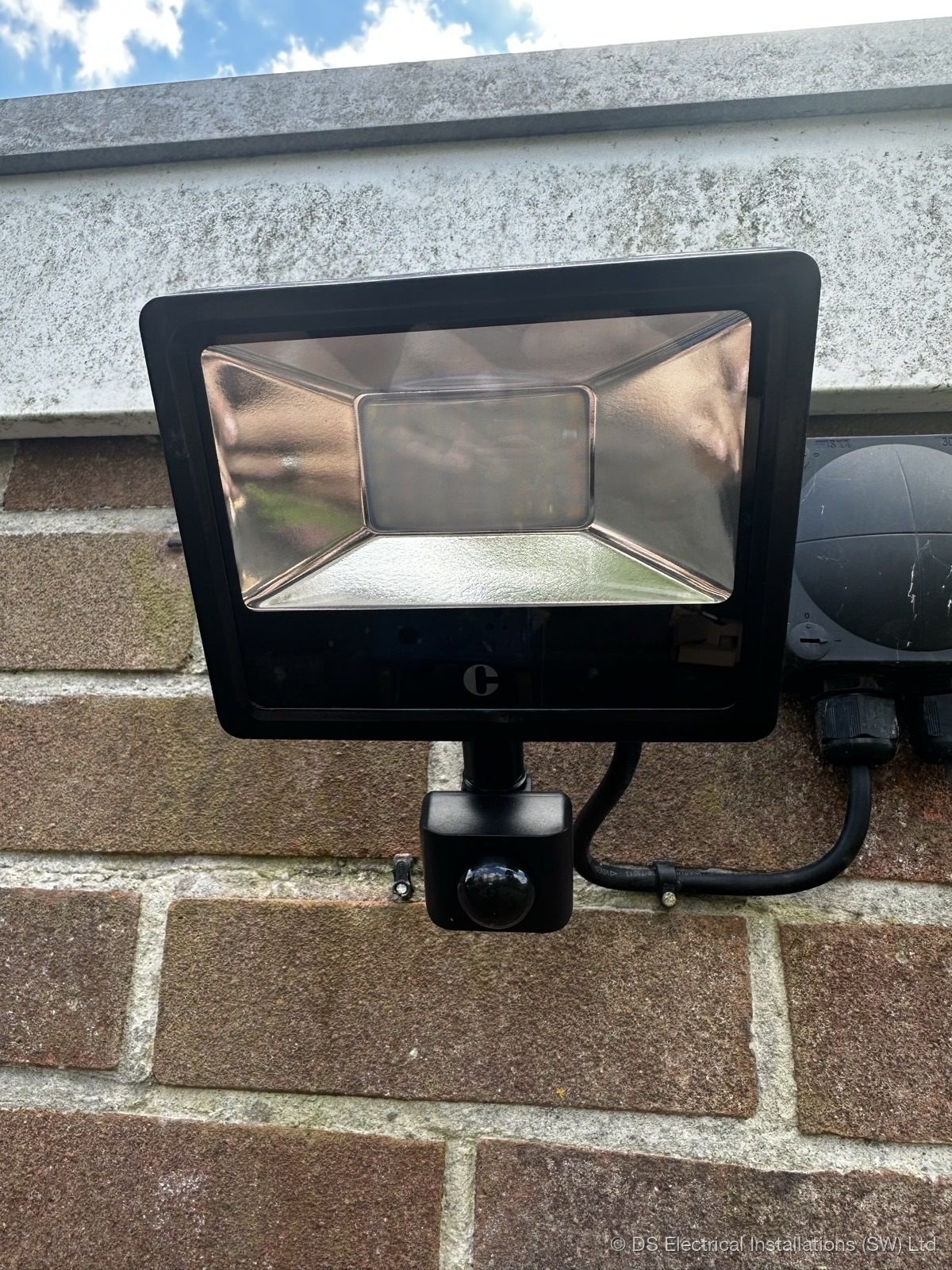



 TrustMark
 Part P
 BS 7671
Outdoor luminaires fail when the IP rating is too low for where they sit. We don’t use cheap import floodlights regardless of their stamped rating, the seal goes within 18 months and the housing fills with water. Brand fittings only, matched to position.
Fittings tucked under deep eaves, porches, covered outhouses. Splash-proof to all directions; not for direct rain.
Mains and low-voltage exposed-to-weather fittings. The default for almost all garden lighting on house walls, garden walls and posts.
Same dust rating as IP65 but tested against more powerful water jets. Worth specifying for very exposed positions.
Required for in-ground spike lights in wet beds, pond surrounds and any luminaire in or under water. SELV 12V or 24V only when submerged.
Real DS Electrical install, IP65 LED PIR floodlight, Mid Somerset.
Outdoor lighting is unforgiving, a poorly sealed joint or wrong cable type and the customer is calling within a year. We design for ten-plus years of service and full BS 7671 compliance, every install.
IP44 under cover, IP65 default exposed, IP66/67/68 for harsh or submerged. Brand fittings only.
All outdoor lighting and socket circuits are RCD-protected at 30mA, an absolute requirement of BS 7671.
Steel-wire armoured, glanded both ends, buried at depth with marker tape. We never bury T&E.
Weatherproof transformer, IP-rated joints, easy to extend later. The right system for path / feature lighting.
Philips Hue Outdoor, DALI commercial. Astronomic clock, zones, schedules and manual override. Whole-house smart-control system integration via specialist integrator we wire to.
Electrical Installation Certificate or Minor Works as appropriate. Part P notification via NAPIT for new circuits.
Final price depends on cable run length, dig vs. surface route, fitting count and whether we’re working alongside a landscaper. Survey is free; written quote is fixed. Read the disclaimer below the cards before assuming.
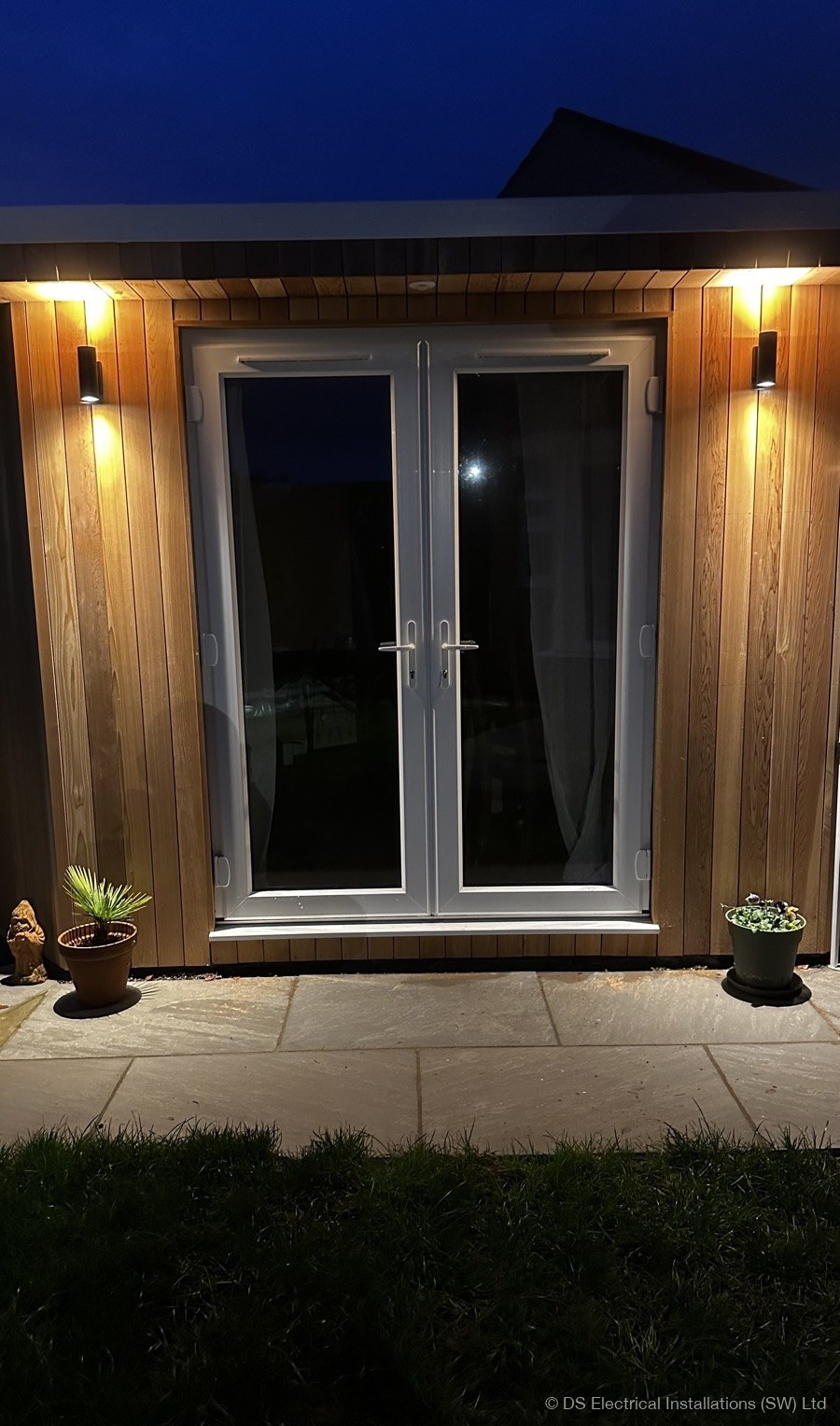
From a single PIR floodlight covering a side gate, to a fully zoned smart-controlled scheme across patio, paths and planting, we design garden lighting that looks intentional, draws very little power, and survives ten-plus winters of Somerset weather.
Both work, they suit different jobs. 12V SELV (Separated Extra-Low Voltage) systems are fed from a transformer in a weatherproof housing or in the house: cable can be surface-clipped, the joints don’t need full IP-rated enclosures, and adding or moving a fitting later is easy. They’re great for path lights, spike lights and decking. 230V mains systems are required for high-output PIR floodlights and long outdoor cable runs, the cable is SWA (steel-wire armoured), buried at depth or routed in conduit, and every fitting needs to be IP65 minimum with weatherproof terminations. We design to suit the job.
IP44 is the minimum for fittings under cover (eaves, porches, outhouses). IP65 is the minimum for any luminaire fully exposed to weather, rain, hose-down, wind-driven spray. IP67 and IP68 are needed for fittings that may be submerged or installed in/around water features and ponds. We don’t use cheap import LED floodlights regardless of their printed IP rating, the seal degrades within 18 months and the unit fills with water. Brand fittings only.
Sometimes. A small low-voltage SELV transformer (under 100W) can usually be spurred from an existing socket circuit if there’s capacity and the spur is fused. A new dedicated mains-voltage outdoor circuit (PIR floodlights, long outdoor cable runs, garden room lighting, garden socket-outlets) needs its own RCBO at the consumer unit and is notifiable under Part P. The survey will tell you which one your job needs.
Yes, we install Philips Hue Outdoor for app-controlled garden lighting (path, floods, feature). Wiring is standard mains or 12V SELV; the Hue control layer sits over the top. For DALI commercial-grade installs we also wire and commission. Whole-house programmable systems (Lutron, Casambi, Rako etc) handled via a specialist integrator we wire to.
There’s no single statutory depth in BS 7671 but accepted best practice is at least 450mm in beds and lawns, 600mm under driveways or anywhere subject to deep cultivation, with marker tape laid 100mm above the cable. SWA (steel-wire armoured) cable is the correct cable type for direct burial, we don’t bury T&E, even in conduit. Where digging isn’t possible we run surface SWA in clipped conduit along walls and fences.
Local, accredited electricians serving the towns & villages where we live and work. Tap your area for a city-specific page with example projects, pricing context and booking.
If you’re landscaping, get the cable runs in before the planting and paving go down, it’s far cheaper than retrofitting. Free survey, fixed quote, NAPIT certified.
07889 334849