
If you have bought an electric vehicle, or are about to, the next question is almost always: what will a home charger actually cost me? The answers you will find online vary widely, usually without much explanation of why. This guide explains what sets the price of an installation in 2026, based on the jobs we do for customers in Wells, Bath, Shepton Mallet, Frome, and across Mid Somerset and surrounding areas.
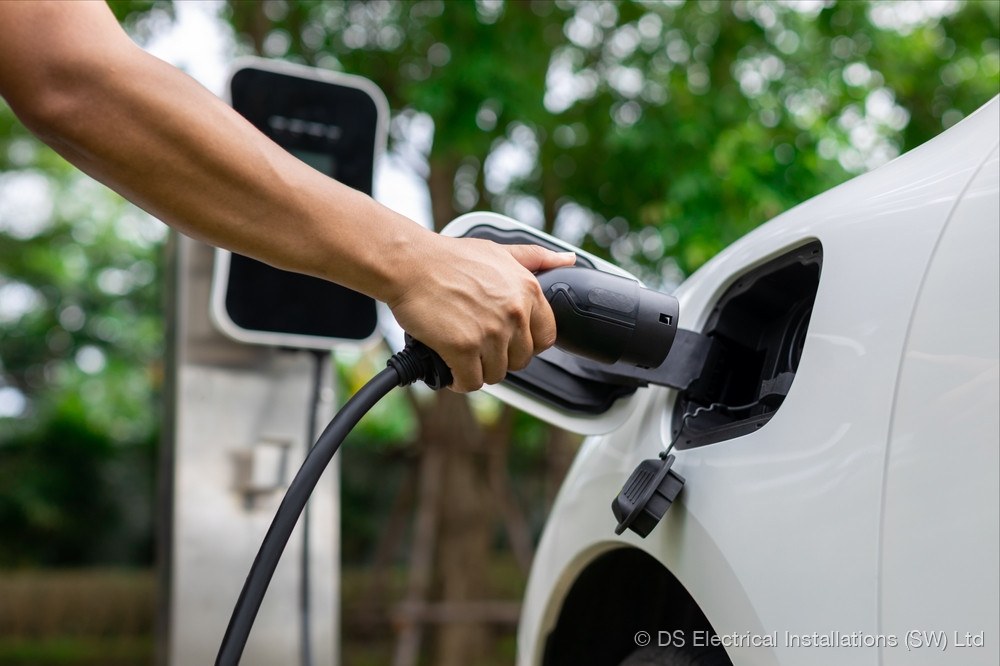
What a Standard Installation Includes
A standard installation is a 7kW single-phase charger where the cable run from your consumer unit to the charger is 10 metres or less. Your written quote sets out exactly what is included, charger and all. A standard installation covers:
- Supply and installation of a 7kW smart charger (charger model agreed at quote stage)
- All wiring, fixings, and conduit
- A dedicated Type A RCBO in your consumer unit (see the technical note below)
- DNO notification to your network operator (National Grid Electricity Distribution, NGED, formerly Western Power), which the network operator requires for every charger
- NAPIT-registered electrical certificate
- Full testing and commissioning, including app pairing where applicable
There are no hidden extras. We will not charge you separately for cable clips, back boxes, or the time it takes to fill in the DNO form. The price is the price.
What Affects the Price
| Scenario | Notes |
|---|---|
| Standard 7kW install (cable run ≤10m) | Most detached and semi-detached homes |
| Cable run 11-30m | Long drive or remote garage |
| Consumer unit upgrade required | Older boards with no spare capacity |
| Underground or through-wall routing | Depends on depth, length, surface |
| 3-phase 22kW install | Requires 3-phase supply at property |
When the Price Goes Up
Cable Runs Over 10 Metres
If your consumer unit is at the back of the house and you want the charger on the front driveway, or if the charger needs to reach a detached garage, the cable run will exceed 10 metres. A longer run means more cable and more time on site, so it is reflected in the price. We always measure and confirm the route before quoting.
Your Consumer Unit Needs Upgrading
A dedicated EV charger circuit requires a spare way in your consumer unit and a suitable RCBO. If your board is full, very old, or a non-compliant plastic enclosure, we will need to upgrade it as part of the job. The upgrade is a separate line on your quote: a full RCBO board, sized to the installation. We can often carry out both jobs on the same visit.
If your consumer unit is a concern, read our fuse board warning signs guide for more detail on what to look for.
Underground or Through-Wall Cable Routes
Some installations require the cable to run underground across a garden or through a thick stone or brick wall, common in older Somerset properties in areas like Frome and Bath. These jobs are quoted individually because the cost depends on the depth required, the length, the surface type (concrete, paving, lawn), and whether any reinstatement is needed after. We will always advise the most practical route and give you a fixed price before any work begins.
Premium Charger Models
The charger model makes a real difference to the total. Whichever model you choose, a Zappi with its smart energy management, a premium Andersen A2 with its bespoke colour and cable management, or a Pod Point Solo 3, the charger is itemised on your written quote alongside the installation. We supply and fit all major charger brands, so let us know your preference at the quote stage.
Ready for a fixed quote?
Book an EV charger installation online. We cover Wells, Bath, Shepton Mallet, Frome, and surrounding Somerset areas.
The RCBO Question: Type A Is Correct, Here Is Why
You may encounter quotes or forum posts suggesting that EV charger installations require a Type B RCBO, which costs significantly more than a Type A. This is a misconception worth addressing directly.
All modern 7kW home chargers, Hypervolt 3, Fastamps, Easee, Ohme, Zappi, Andersen, and others, have built-in 6mA DC fault detection circuitry. This is the specific characteristic that used to require a Type B device. Because the charger already handles this internally, the external protection only needs to be a Type A RCBO, which is fully compliant with BS 7671 (the 18th Edition wiring regulations).
What This Means for Your Quote
A Type A RCBO costs a fraction of a Type B. If someone is quoting you for a Type B device when the charger already includes internal DC detection, you are either being overcharged or the installer is not up to date with current wiring practice. We always confirm the correct protection type for the specific charger model being installed.
If you are comparing quotes and want to understand the technical specification behind each one, the EV charger page has more detail on the installation process, and our customers' experiences are on the testimonials page.
DNO Notification: What It Is and Why We Handle It
Every home charger must be reported to the network operator. Most single chargers are installed first and notified within 28 days; if the supply is looped, the fuse rating is unknown or demand is high, we apply first and wait for approval. In our area that is National Grid Electricity Distribution (NGED, formerly Western Power), with SSEN (Scottish and Southern Electricity Networks) only at the Wiltshire and Dorset edges.
Failure to notify can leave your installation non-compliant; check your insurance policy for any conditions on electrical work. We file the notification on every single job as part of the standard installation process, it is not an optional extra and there is no additional charge for it.
Compatible Chargers We Supply and Install
We are authorised to supply and install all of the leading charger brands. Here is a brief guide to the most popular models in 2026:
- Hypervolt 3, our most popular choice. Clean design, reliable app, excellent tariff scheduling. Ideal for most homes.
- Fastamps, robust, straightforward, and well-priced. A good option if smart features are not a priority.
- Easee One, modular design with load balancing capability. A strong choice for households with multiple EVs or tight consumer unit headroom.
- Ohme Home Pro, integrates directly with smart energy tariffs such as Intelligent Octopus. If you are on or planning to move to a smart tariff, this is worth considering.
- Zappi, the go-to if you have a time-of-use tariff and want granular charging control. Excellent app.
- Andersen A2, premium aesthetics with integrated cable management. Available in a wide range of colours and finishes. Perfect for period properties in Bath or Frome where the standard charger look does not suit the building.
If you are unsure which charger is right for you, read our dedicated home EV charger comparison guide which gives an honest installer's verdict on each model.
What Happens on the Day
A straightforward EV charger installation takes between 2 and 4 hours. Here is what to expect:
- Cable route assessment, we confirm the most practical route from the consumer unit to the charger position, noting any surface types or obstacles.
- RCBO installation, a dedicated Type A RCBO is fitted in your consumer unit, providing the correct protection for your specific charger.
- Cable run, cable is routed and secured using appropriate conduit or trunking. We leave the installation tidy.
- Charger mounting and wiring, the charger is fixed to the wall, wired, and sealed against ingress.
- Testing and commissioning, the circuit is tested to BS 7671, the charger is powered up, app pairing is completed, and smart scheduling is confirmed working if applicable.
- Certification and notification, you receive your NAPIT electrical certificate before we leave, and DNO notification is filed.
For customers in Wells, Shepton Mallet, Midsomer Norton, and Castle Cary we can typically offer installation within 5 to 10 working days of booking. For Bath and Frome, availability is similar, get in touch to confirm a slot.
Common questions
How much does a home EV charger installation cost in 2026?
The price depends on the charger you choose, the cable run, and the condition of your consumer unit and earthing. Your written quote sets out exactly what is included, charger and all. Installation includes a dedicated Type A RCBO circuit, all containment, and Part P certification.
Which EV charger brands do you install?
We install Hypervolt (best app + solar integration), Ohme (dynamic tariff linking, ideal for Octopus Intelligent), and Wallbox (reliable mid-range). All include a 3-year warranty. We advise on the best model for your car, tariff, and solar setup.
Does my home need 3-phase power for an EV charger?
No — most home EV chargers run on single-phase 7kW, which charges a typical EV in 6–9 hours overnight. Three-phase (22kW) is faster but requires a 3-phase supply (most homes have single-phase). We check your DNO supply and consumer unit before recommending a solution.
How long does EV charger installation take?
A standard home EV charger installation takes 3–4 hours. Longer cable runs (from garage, outbuilding, or long wall) may take 5–6 hours. We confirm the expected duration at booking. The charge point is ready to use the same day.